Restaurant owners rarely worry about sales tax until something goes wrong. A missed filing deadline, an incorrect tax rate, or a misunderstanding about what is taxable can quickly turn into penalties, audits, or unexpected liabilities. The reality is that Restaurant Sales Tax is not just an accounting task. It is a daily operational responsibility that directly impacts your pricing, profitability, and compliance.
Many restaurant operators assume that sales tax is simply a fixed percentage added to every bill. In reality, Restaurant Sales Tax Rules vary by state, city, and even by the type of food or service you provide. A dine-in meal, a takeaway order, and a delivery order may all be taxed differently. Alcohol may have separate rates. Service charges may or may not be taxable.
This guide is designed to simplify that complexity. You will learn how Restaurant Sales Tax Rates work across the United States, what items are taxable, how to calculate tax correctly, and how to avoid the most common mistakes that lead to audits.
How Restaurant Sales Tax Functions in Reality?
When a client makes an order, the subsequent actions take place -
- The overall charge is determined by the prices on the menu.
- The relevant tax rate is determined based on the item's type and location.
- The final bill includes the tax amount.
- The restaurant sums up the total from the customers.
- The gathered tax is subsequently reported and sent to the government.

Sales taxes can be a real pain in the neck if you don’t know what you’re doing.
Sales taxes are confusing and difficult to understand.
Why Restaurant Sales Tax Becomes Complicated
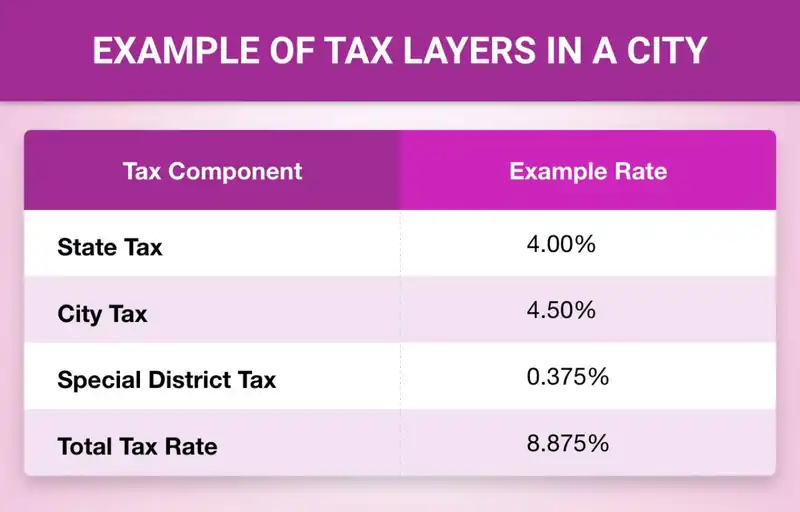
Sales tax for restaurants is seldom just one percentage. Rather, it is composed of several layers -
- Sales tax on goods
- Local taxation
- Municipal tax
- Unique levies like dining taxes or travel taxes
For instance, a diner in New York City enforces a total tax rate of 8.875%, whereas a diner in Chicago might impose a rate that surpasses 10%.
The sales tax rules for restaurants and other service companies can be confusing and difficult to navigate.
Sales tax is something you need to know about if you work in the service industry.
Which Restaurant Food and Beverage Items Are Subject to Tax?
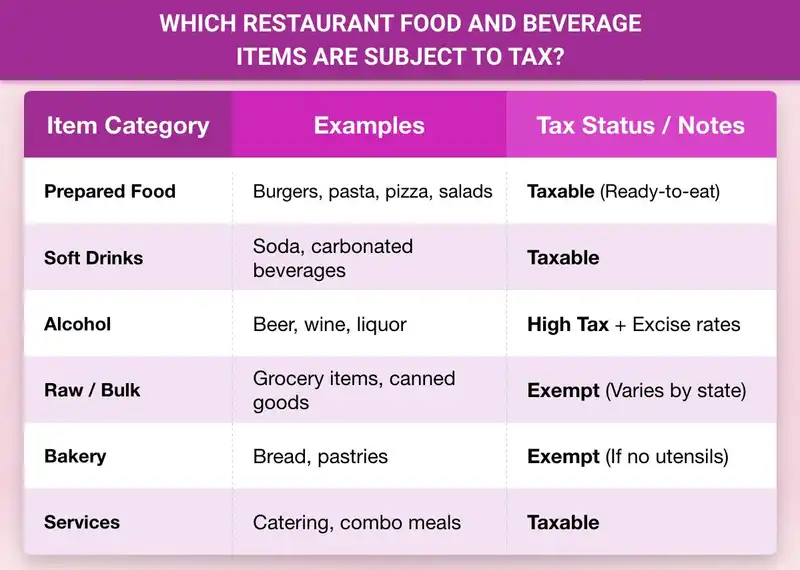
Items Typically Taxable
- Hot prepared foods (burgers, pasta, pizza)
- Ready-to-eat cold items (salads, sandwiches)
- Soft drinks and carbonated beverages
- Alcoholic drinks (beer, wine, liquor)
- Catering services and combo meals
Items That May Be Exempt (varies by state)- Raw or unprocessed food ingredients
- Packaged goods (snacks, canned items)
- Bakery items without utensils (in some states)
- Bulk food is sold for later consumption
Special Case- Alcohol Taxation- Often taxed at higher rates than food
- May include additional excise taxes
- Requires separate tracking and reporting in POS systems
Note- Tax rules vary by state, so correct classification is essential to avoid errors.
How Do Restaurant Sales Tax Rates Vary by State?
Restaurant Sales Tax Rates are crucial due to their inconsistency throughout the United States. No universal national rate is applicable everywhere. Instead, restaurant owners must navigate a complex system where tax rates differ not just from state to state but also among cities, counties, and even particular districts within the same area.
This indicates that two restaurants offering the identical meal can impose entirely different tax rates solely based on their location in separate jurisdictions. This necessitates restaurant owners to maintain continuous awareness, precise configurations, and frequent updates to adhere to Restaurant Sales Tax Regulations.
States Without Sales Tax
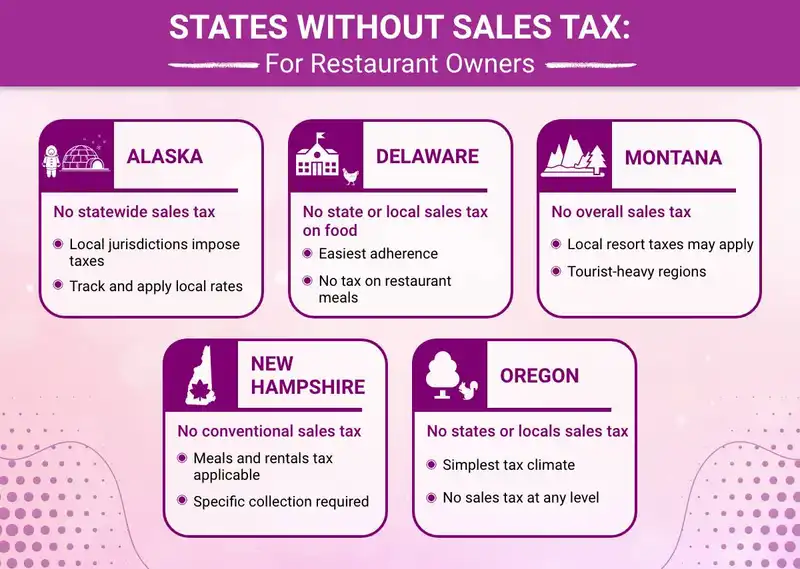
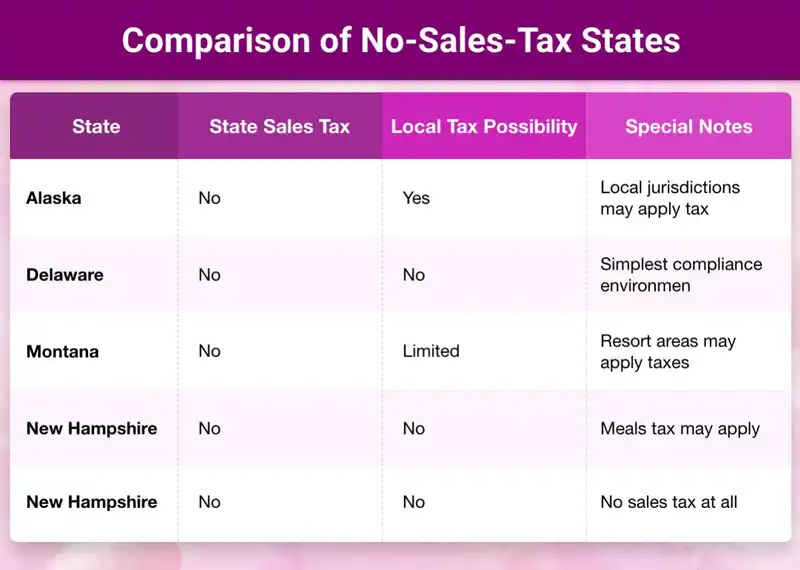
Certain states do not enforce a statewide sales tax, which might initially appear to be a significant benefit for restaurant owners. These regions consist of-
Alaska does not have a statewide sales tax; however, numerous local jurisdictions impose their own sales taxes, requiring restaurants to accurately track and apply these local rates.
Delaware does not impose any state or local sales tax on food from restaurants, creating one of the easiest settings for sales tax adherence.
Montana has no overall sales tax, but some resort areas might implement local taxes that could impact restaurants in tourist-heavy regions.
New Hampshire lacks a conventional sales tax but does levy particular taxes on meals and rentals, which requires restaurant owners to collect and pay these specific taxes.
Oregon does not have a sales tax at the state or local level, providing one of the simplest tax climates for restaurant owners.
Why No Sales Tax Doesn't Always Indicate No Complications
Even in states without a statewide sales tax, restaurant owners should not believe that compliance is entirely removed. Regional regulations, unique taxes, and sector-specific standards may still be in effect. A restaurant in Alaska, for instance, might still have to comply with various local tax rates depending on the city or borough where it operates.
Examples of Sales Tax in Real-World Restaurants
Restaurant Sales Tax is simpler when you examine its application in actual scenarios. Although rules and percentages may seem theoretical, real-life situations illustrate how Restaurant Sales Tax Regulations and Rates are relevant to daily transactions within a restaurant.
Presented here are specific, practical instances that illustrate how restaurant proprietors manage sales tax in actual operations throughout various states.
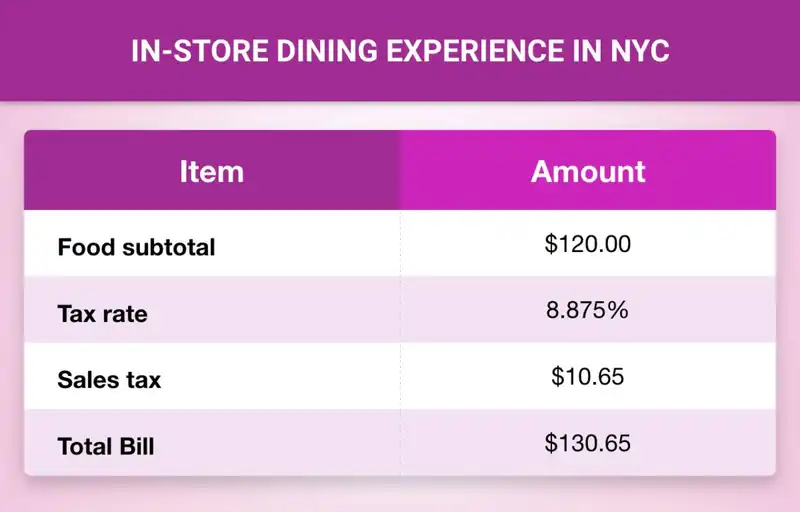
Example 1- In-Store Dining Experience in NYC
Picture a patron eating at an eatery in New York City. The city's Restaurant Sales Tax Rate totals 8.875%, comprising state, city, and local district taxes.
In this scenario, the restaurant needs to precisely compute the tax and distinctly display it on the bill. The customer is responsible for the tax payment, but the restaurant must report and submit it to the correct authorities.
This example illustrates how Restaurant Sales Tax Rates directly influence the final price that customers encounter.
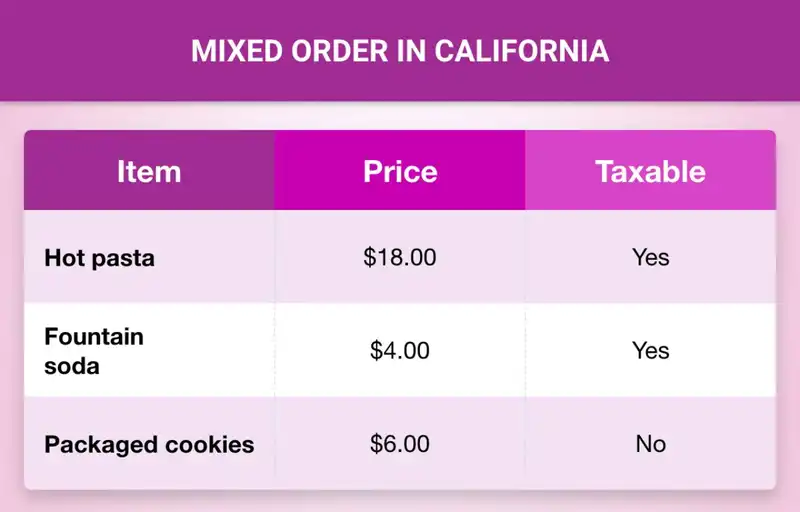
Example 2- Mixed Order in California (Taxable vs Non-Taxable Items)
In California, taxability depends on whether the item is considered prepared food or a grocery-type product.
A customer places the following order -
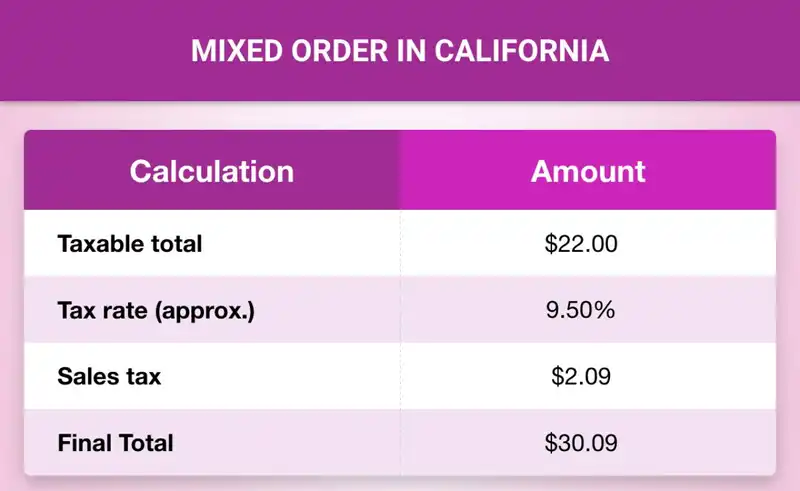
The key takeaway here is that tax is not applied to the full bill. Only the taxable items are considered when calculating Restaurant Sales Tax.
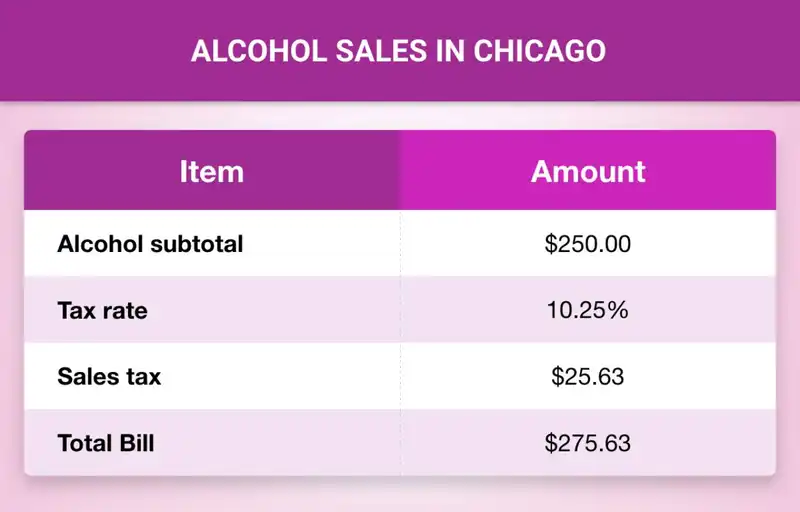
Example 3- Alcohol Sales in Chicago
Alcohol sales introduce additional complexity because they are often taxed at higher rates and may include multiple layers of taxation.
A group orders drinks at a bar in Chicago-
In addition to standard sales tax, alcohol may also be subject to excise taxes, which are built into pricing. This makes it critical for restaurants to correctly categorize alcohol sales under the Restaurant Sales Tax Rules.
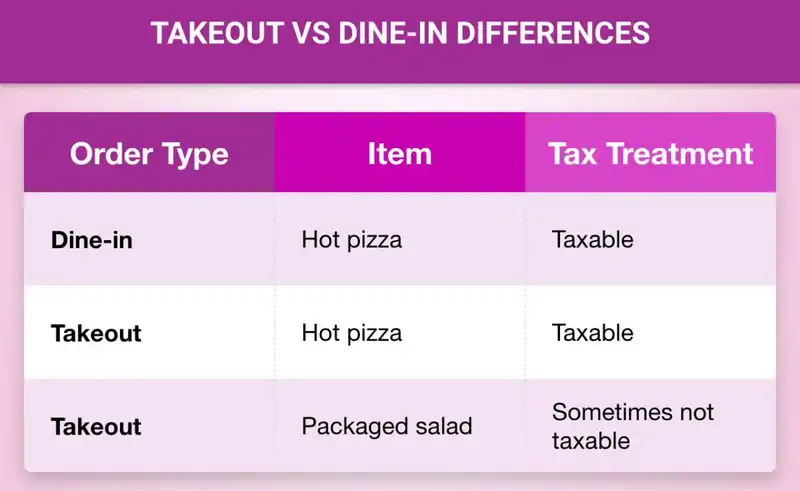
Example 4- Takeout vs Dine-In Differences
In many states, takeout and dine-in are taxed similarly, but differences can arise depending on how food is prepared or served.
Let's consider a scenario-
If a restaurant incorrectly assumes that all takeaway items are tax-free, it could under-collect tax and face penalties later.
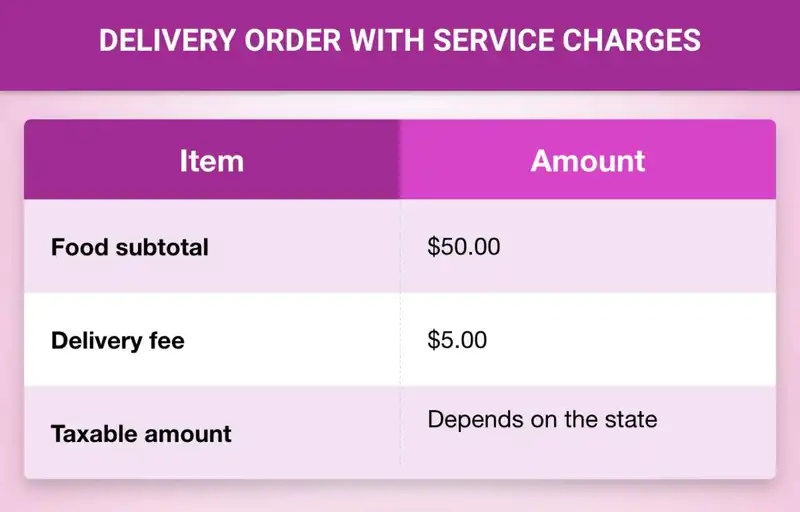
Example 5- Delivery Order with Service Charges
Delivery orders introduce another layer of complexity, especially when service or delivery fees are involved.
In some states, the delivery fee is considered part of the taxable transaction, especially if it is not separately stated. In others, it may be exempt.
This means restaurants must carefully configure their systems to apply Restaurant Sales Tax Rules correctly for delivery orders.
How Does a POS System Automate Sales Tax Collection?
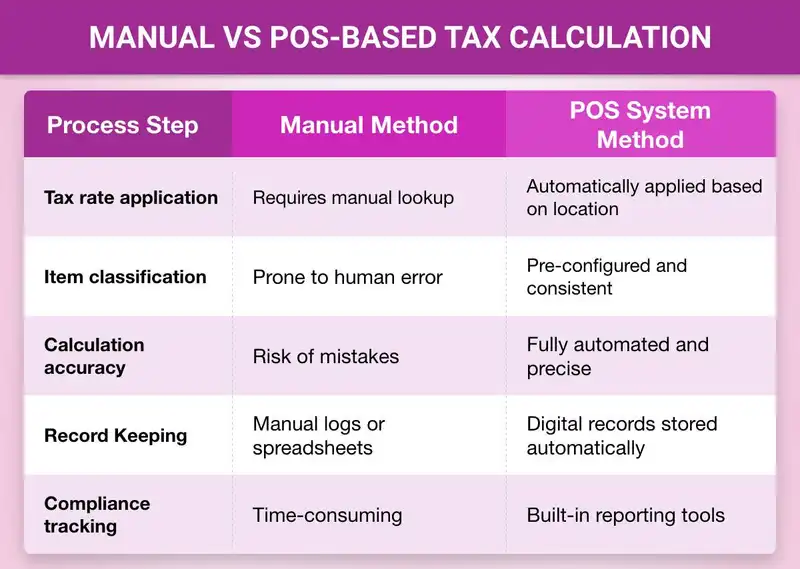
Handling Restaurant Sales Tax manually is one of the quickest ways to incur expensive errors. Due to the ever-changing Restaurant Sales Tax Regulations and differing Restaurant Sales Tax Rates among states and cities, depending on spreadsheets or manual calculations may result in inaccurate billing, reporting mistakes, and potential audits.
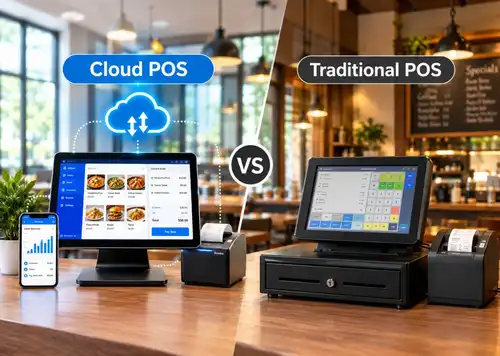
A modern POS system addresses this issue by streamlining the complete sales tax procedure, from computation at checkout to compliance reporting.
How a POS System Automatically Manages Sales Tax
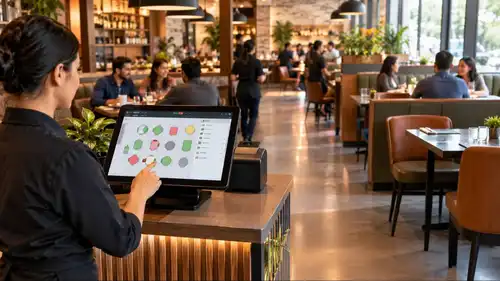
A POS system is more than just a payment processor. It is a centralized system that encompasses your menu, your location, and your tax responsibilities. This is the procedure in a real restaurant setting, outlined step by step -
- When a customer makes a purchase, the POS system recognizes every item along with its category, like food, drink, or alcohol.
- The system determines if the item is taxable by referencing pre-set Restaurant Sales Tax Rules.
- It uses the appropriate tax rate determined by the restaurant's location, factoring in state, county, and city taxes.
- The system computes the precise tax amount instantly and includes it in the total.
- A comprehensive receipt is created that distinctly displays the tax breakdown for clarity.
- All transaction information is automatically recorded for reporting and future assessments.
The entire process takes place in seconds, without needing human involvement.
Common Restaurant Sales Tax Mistakes (and How to Avoid Them)
Even seasoned restaurant proprietors commit mistakes when managing Restaurant Sales Tax, particularly since Restaurant Sales Tax Regulations differ by state, city, and type of item. These errors are usually not deliberate, yet they may result in fines, audits, and loss of income if not addressed promptly.
Understanding the most common issues and how to avoid them can save your business both time and money.
1. Applying the Wrong Tax Rate Across Locations
A common error is applying a uniform tax rate to all transactions, regardless of operating across various cities or states. As Restaurant Sales Tax Rates differ by jurisdiction, using an incorrect rate may lead to either under-collecting or overcharging customers.
How to avoid this mistake-
Make certain that your system is set up with tax rates specific to each location. Every restaurant site must establish its own tax configuration that aligns with state, county, and municipal regulations.
2. Misclassifying Taxable and Non-Taxable Items
Numerous restaurants believe that all food items are taxed identically, but this is incorrect. Ready-to-eat food often incurs taxes, whereas certain packaged or grocery items might be exempt.
How to avoid this mistake-
Effectively classify menu options in your POS system. Distinguish items like hot meals, packaged products, drinks, and alcoholic beverages so that the appropriate tax treatment is automatically assigned.
3. Ignoring Local and Special Taxes
Certain restaurant proprietors only implement state sales tax and overlook extra levels like city taxes, county taxes, or specific meal taxes. This may result in payment shortages and regulatory problems.
How to avoid this mistake-
Investigate all relevant taxes in your region, encompassing local and special district taxes. Consistently check for updates from your state's Department of Revenue to remain compliant with evolving Restaurant Sales Tax Regulations.
4. Not Updating Tax Rates Regularly
Tax rates aren't permanent. Cities and states often revise their tax systems, particularly in regions with tourism or development initiatives.
How to avoid this mistake-
Arrange periodic evaluations of your tax configurations or implement a POS system that automatically adjusts tax rates.
5. Poor Record Keeping
Incomplete or disorganized records make it difficult to file accurate returns and defend your business during an audit.
How to avoid this mistake-
Maintain detailed digital records of all transactions, tax collected, and reports. Ensure that your system stores historical data that can be easily retrieved when needed.
Final Thoughts
The sales tax on restaurants is more than merely a regulatory obligation. It is an essential aspect of operating a financially stable and compliant enterprise. The distinction between a well-run restaurant and one encountering fines usually relates to the precision in managing sales tax.
By comprehending Restaurant Sales Tax Regulations, implementing accurate Restaurant Sales Tax Rates, and utilizing appropriate systems, you minimize risk and enhance confidence in your operations.
The most intelligent restaurant owners do not consider sales tax an afterthought. They create systems around it, automate whenever feasible, and frequently assess their procedures.
To prevent expensive errors and concentrate on expanding your restaurant, begin by correctly managing your sales tax process today.
You’re already working in a high-pressure environment. The last thing you need is to worry about sales tax.
You’ve got clients to serve, food to prepare, and tables to bus. Sales tax doesn’t seem like something you can afford to spend time on.


















-Benefits-&-POS-Guide-150-90faf61de.webp)