Why are Credit Card Transactions Important for Small Enterprises?
Numerous business owners initially regard payment processing as merely another operational duty. Nonetheless, it directly impacts your earnings, client contentment, and sustainable development.
Firstly, accepting credit cards allows you to secure additional sales. Many customers opt for card payments, and some might not have cash on them at all. If you are unable to accommodate their chosen payment method, they might just opt for a rival.
Additionally, credit card transactions enhance your business's credibility. When customers encounter contemporary payment methods such as tap-to-pay or mobile wallets, they view your business as reliable and professional.
Thirdly, digital payments enhance cash flow. In contrast to cheques or payment methods that involve delays, card transactions are typically processed within one to three business days, enabling better management of expenses like inventory, salaries, and utilities.
Ultimately, card payments offer useful information. You can monitor sales patterns, customer actions, and busiest business times, aiding you in making more informed operational choices.

Your business needs to accept credit cards. You want to get paid, and your customers want to pay you.
You can't figure out how to get started accepting credit card payments for your business.
The Process of Credit Card Transactions
Even though a credit card transaction lasts just a few seconds, numerous processes occur in the background.
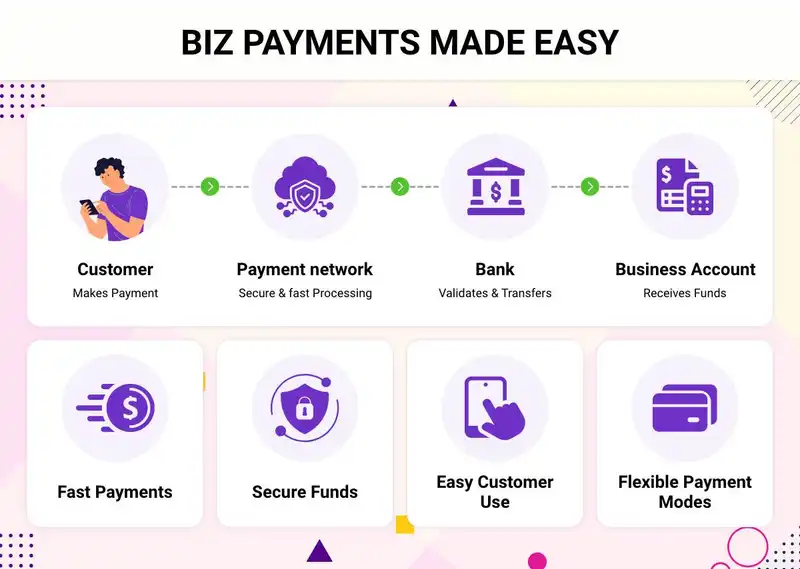
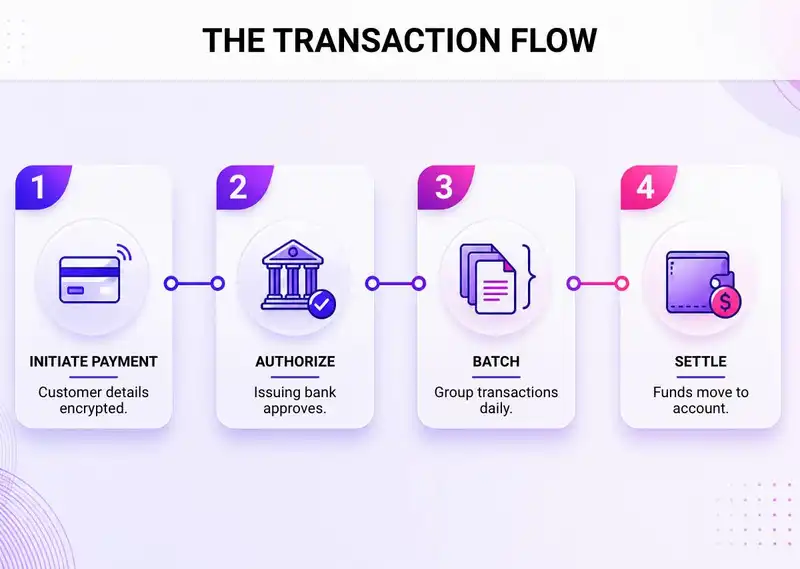
The procedure starts when the customer provides their card and starts the payment using a POS system, mobile device, or online payment portal. The payment details are promptly encrypted to guarantee safety.
The following step is the authorization phase. The transaction request is sent by the payment processor to the card network, which then relays it to the issuing bank of the customer. The bank checks if the card is valid, if there are enough funds or credit available, and if the transaction seems legitimate. According to these verifications, the transaction is either accepted or rejected.
After approval, the transaction proceeds to batching. Over the course of the day, various transactions are combined and readied for settlement.
Ultimately, at settlement, the money is moved from the issuing bank to your business account. This typically requires one to three business days, based on your payment provider.
5 Easy Steps to Begin Accepting Credit Card Payments
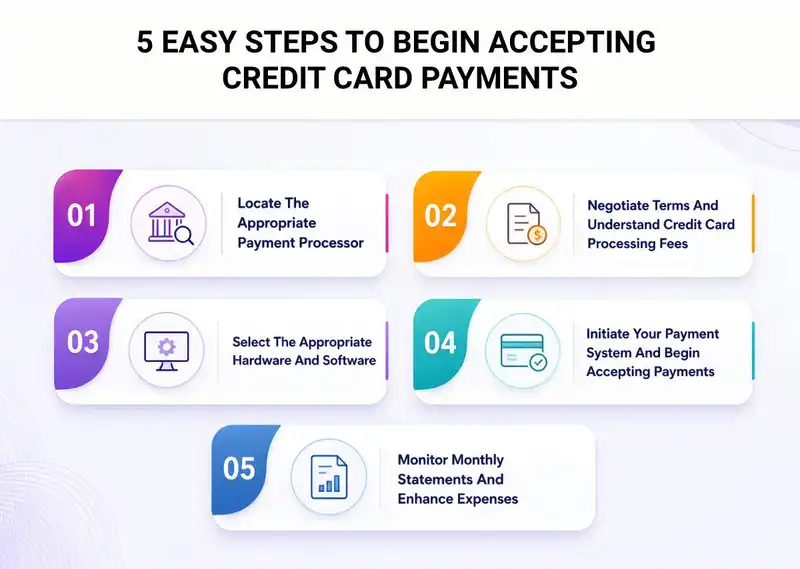
1. Locate the Appropriate Payment Processor
The initial and crucial step is selecting a payment processor. This is the firm that oversees your transactions and guarantees that money is moved safely to your account.
Typically, there are two kinds of processors offered. Payment service providers provide easy setup and straightforward pricing, making them perfect for startups or small enterprises. Conversely, conventional merchant account providers have lower rates for businesses with increased transaction volumes but necessitate a more extensive approval procedure.
When choosing a processor, it's important to take into account elements like clear pricing, the quality of customer service, compatibility with your current systems, and the speed of fund deposits into your account.
Investing time in selecting the appropriate processor can lead to considerable savings and reduced operational stress for your business in the long term.
2. Negotiate Terms and Understand Credit Card Processing Fees
Numerous companies inadvertently pay too much for credit card processing as they lack a complete understanding of the fee structure.
Processing charges generally consist of a portion of every transaction plus a set fee. Moreover, certain providers impose monthly charges, compliance fees, or penalties for terminating contracts early.
Reviewing all terms thoroughly before signing an agreement is crucial. Inquire with your provider regarding undisclosed charges, the duration of the contract, and if the rates can vary in the future.
Even a small difference in rates can have a large impact on your annual profits, especially if your business processes a high volume of transactions.
3. Select the Appropriate Hardware and Software
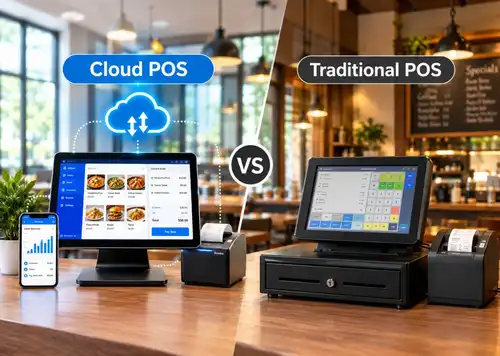
Your payment arrangements will be impacted by your business type. If you operate a physical retail store or a restaurant, you may need a POS system, a card reader, and (possibly) additional hardware (like receipt printers and cash drawers). Restaurants may also benefit from using portable devices that allow servers to take payments right at the customer's table.
If you operate a mobile business, such as a food truck or providing services, portable card readers that work with smartphones offer an excellent way to accept payments and are a good option.
If your business is an online business, then you'll want to invest in a payment gateway that connects with your website and allows your customers to complete their purchases safely.
It's essential to invest in reliable hardware and software that will help you run your business day-to-day smoothly. Providers of equipment often come with high processing fees or hidden costs, so be sure you know what you're getting into before choosing a provider.
It is not easy to accept credit card payments for small businesses. There are many fees and regulations to contend with.
If you want to accept credit cards, you need to know the basics of how credit card processing works.
4. Initiate Your Payment System and Begin Accepting Payments
After your system is established, you are prepared to begin receiving payments from clients.
In the early stages, it is crucial to make sure that your checkout procedure is seamless and effective. Employees need to be trained to process transactions efficiently and address simple issues like payment declines or connectivity troubles.
You might also face circumstances like unsuccessful transactions or reversals. These are typical components of payment processing and shouldn't be a reason for worry as long as they are handled correctly.
5. Monitor Monthly Statements and Enhance Expenses
The last step is ongoing tracking and improvement.
Many small businesses do not take the time to review their monthly accounts. The result often is missed errors and incorrect charges. By reviewing monthly statements, businesses will identify discrepancies, understand their processing costs, and make adjustments as required.
In addition to reviewing your payment information, being able to identify trends related to peak sales periods, popular products, and buyer preferences assists in developing marketing strategies and improving your general operations.
With the continual improvement of this process, your payment systems will remain efficient, cost-effective, and aligned with your business goals.
When is the Right Time to Change Your Credit Card Processor?
Many of these companies have been using the same payment processors for years, without any evaluation of how much they are paying or whether they have helped them. Many signs indicate it is probably time to make a switch. If you see that you are paying higher fees, you are having ongoing technical issues, you are not receiving sufficient customer service, or you are not receiving newer features, such as mobile payments and integrations, then it may be worth your time to explore other options.
Switching to a different provider can help save you money, increase your efficiency, and improve your customers' experience. Before you make the switch, you should review the contract terms and see if you have any potential termination fees, and what the onboarding process will be for your new provider.
Ways to Lower Credit Card Processing Fees
Lowering processing expenses is among the most efficient methods to enhance your profit margins.
Effective Methods to Cut Costs
Begin negotiating your rates with your provider, particularly as your transaction volume grows over time. Numerous processors provide improved pricing for larger quantities.
Promote in-person payments whenever feasible, as they generally incur lower fees than online or manually processed transactions.
Steer clear of extra features and services that you don't utilize. Certain providers package features that might not apply to your business.
Consistently check your statements to spot concealed fees or billing mistakes. Even minor differences can accumulate over time.
Ultimately, select the appropriate pricing strategy for your company. Flat-rate pricing is straightforward but might be pricier, whereas interchange-plus pricing can provide cost benefits for expanding companies.
The Impact of Payment Experience on Customer Retention
The payment experience is frequently the last engagement a customer has with your company, and it significantly influences their overall perception.
A lengthy or difficult checkout procedure can annoy customers and diminish the chances of them returning. Conversely, a quick, seamless, and adaptable payment process leaves a favorable impression and fosters customer loyalty.
Providing various payment methods, minimizing transaction duration, and guaranteeing system dependability are essential elements in achieving a smooth experience.
For restaurants, quicker payments result in faster table turnover and enhanced service efficiency.
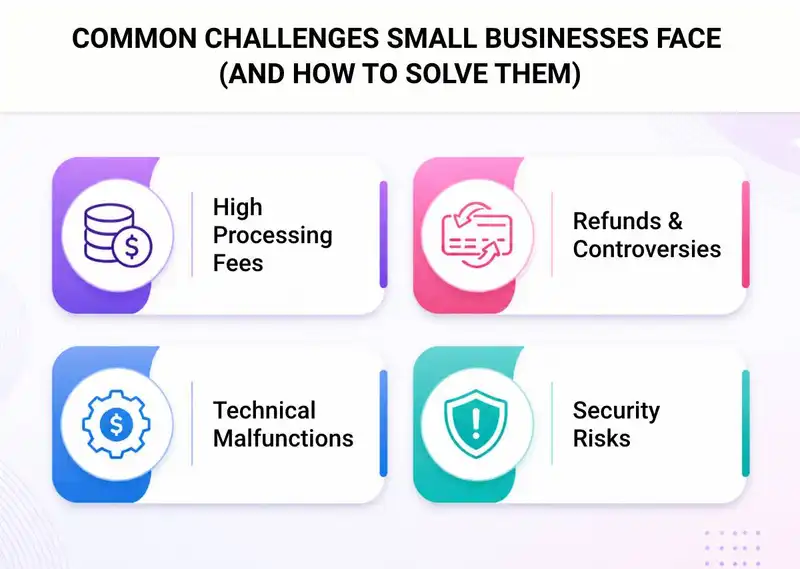
Common Challenges Small Businesses Face (And How to Solve Them)
High Processing Fees
Numerous companies face significant charges because of insufficient knowledge. The answer is to evaluate providers and frequently compute your effective rate.
Refunds and Controversies
Conflicts may result in decreased income. To reduce this, guarantee clear invoicing details, keep transaction documentation, and offer excellent customer support.
Technical Malfunctions
System outages can interfere with operations. Selecting a dependable processor that supports offline mode can prevent lost sales.
Security Risks
Data leaks can harm your reputation. Consistently select a processor that adheres to PCI DSS standards and provides encryption and fraud prevention features.
Future Trends in Credit Card Processing
The payment environment is constantly changing, and keeping up with trends can provide your business with a competitive advantage. Artificial intelligence is utilized to identify fraud instantly, enhancing transaction security.
Biometric verification methods, including fingerprint and facial recognition, are anticipated to be increasingly prevalent in payment systems. Cloud-based POS systems allow companies to oversee operations from a distance and access data in real time.
Quick payment settlements, such as instant payouts, are increasingly becoming a common expectation.
Final thoughts
Implementing credit card payments for your small business might appear complicated initially, but it becomes easier when tackled one step at a time.
Selecting the appropriate processor, being aware of charges, investing in suitable tools, and regularly tracking your performance can establish a payment system that fosters your business expansion.
An efficiently designed payment system accomplishes more than merely handling transactions. It enhances customer satisfaction, boosts revenue prospects, and enables you to operate your business more effectively.
Accepting credit cards is a major part of running a business. You need to find a way to process payments and get paid.
Credit card payment processing is not as simple as it sounds. There are many things you need to consider and take care of before you can start accepting credit cards.



























-Benefits-&-POS-Guide-150-90faf61de.webp)