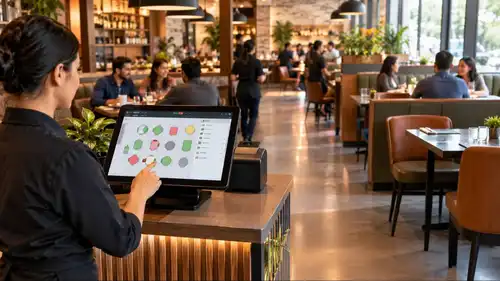
Understanding where your money comes from and where it goes is one of the biggest challenges in modern business. For retailers and restaurant operators, disconnected tools often hide the true picture of profitability. Sales data sits on one platform, expenses on another, while reporting becomes a tedious process rife with delays and human error.
Businesses that gain financial clarity today are not necessarily collecting more data. They are connecting the right systems together so financial decisions reflect what is actually happening in real time.
Why Profit Visibility Breaks Down in Modern Businesses
Many organizations already have access to sales reports, invoices, payroll records, and inventory data. The real problem is fragmentation. When operational systems fail to communicate effectively, leaders lose visibility into margins, cash flow, and performance trends.
This challenge becomes even more noticeable in restaurants where rapid transactions, fluctuating inventory costs, and labor expenses constantly shift profitability.
A disconnected restaurant POS system may accurately capture transactions at checkout, but without synchronized financial reporting, operators still struggle to understand actual profit drivers.
Common Causes of Financial Blind Spots
- Disconnected platforms create inconsistencies between revenue records and operating expenses, slowing down and making reconciliation less reliable during financial close periods.
- Manual spreadsheet entry introduces avoidable human errors that can distort reports, especially during busy seasonal periods or high transaction volume.
- Limited reporting tools prevent managers from spotting meaningful trends early, thereby reducing their ability to proactively adjust pricing, staffing, or purchasing strategies.
- Poor integration between inventory and payment systems often leads to inaccurate cost tracking, particularly for businesses that handle perishable goods or fluctuating supplier pricing.
Businesses that overcome these challenges typically focus on building a connected financial ecosystem rather than adding more standalone software.

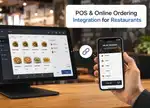
Online Orders Made Easy
Plum POS Ensures Seamless Processing
The Role of POS Data in Financial Clarity
A modern point-of-sale platform is no longer just a payment processor. It acts as a live operational dashboard that reflects purchasing behavior, labor efficiency, menu performance, and inventory movement.
This is where point of sale financial management becomes especially valuable. Instead of reviewing isolated reports days later, operators can track financial performance as business activity occurs.
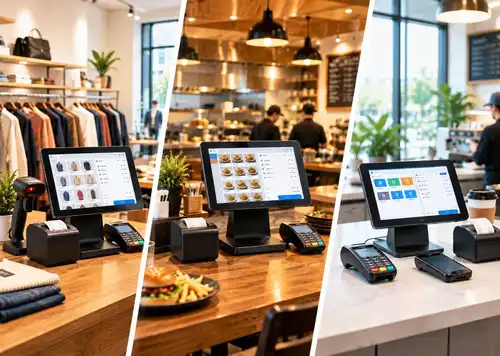
For restaurant owners, a unified restaurant POS system with all the must-have tools provides visibility into high-margin products, peak service hours, and labor allocation patterns that directly impact profitability.
How POS Systems Enhance Visibility
- Real-time sales tracking enables businesses to continuously monitor performance, enabling faster responses to trends and anomalies.
- Detailed transaction data supports accurate revenue recognition, ensuring financial reports reflect actual business activity.
- Integration with inventory systems helps identify cost drivers, improving margin analysis and decision-making.
For a deeper understanding of how transaction systems influence financial outcomes, exploring insights into
POS systems can provide valuable context.
Why Online Accounting Systems Matter More Than Ever
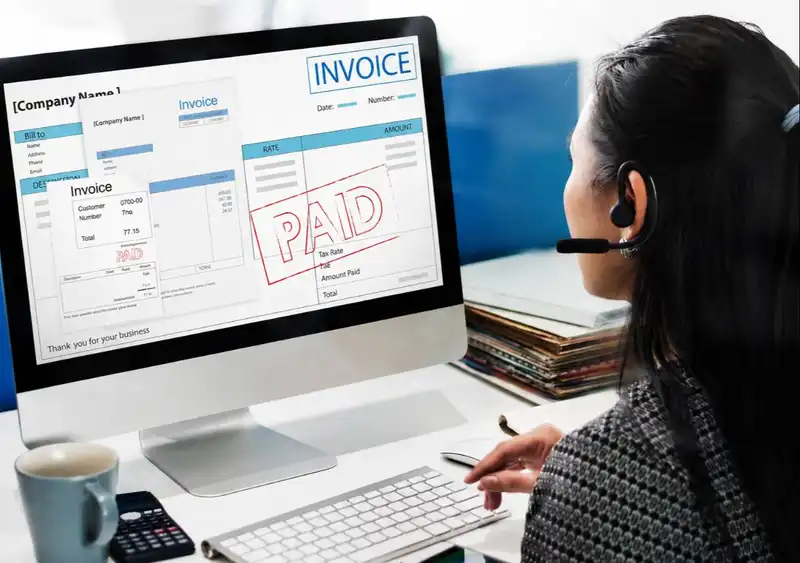
Sales data alone does not create financial clarity. Businesses still need structured reporting, reconciliation, forecasting, and tax-ready financial documentation.
Modern online accounting systems close this gap by automatically syncing operational data into centralized reporting environments. This reduces administrative workload while improving reporting accuracy.
A restaurant POS system connected directly to accounting software creates a much clearer view of revenue, expenses, taxes, payroll, and vendor payments without requiring repeated manual input.
According to a 2024 PwC report, organizations that use integrated digital systems and advanced analytics achieve significantly faster decision-making and greater operational efficiency. The findings highlight how centralized data environments improve financial responsiveness across industries.
Benefits of Integrated Accounting Systems
- Automated synchronization reduces repetitive bookkeeping work, allowing finance teams to focus more on analysis and forecasting instead of data cleanup.
- Centralized dashboards provide real-time financial visibility, enabling operators to respond faster to rising costs or declining margins.
- Cloud-based accessibility improves collaboration between accountants, managers, and business owners across multiple locations.
- Standardized reporting structures create more accurate historical comparisons, making budgeting and forecasting substantially more reliable.

From Click to Kitchen
Handle All Your Online Orders with Plum POS
Bridging the Gap with Online Accounting Systems
While POS systems capture revenue, accounting platforms provide the structure needed to interpret that data. When these systems are connected, businesses gain a comprehensive view of their financial health.
Modern online accounting tools enable seamless integration, automating data synchronization and reducing manual workload.
Benefits of Integrated Accounting Systems
- Automated data synchronization eliminates manual entry errors, ensuring accuracy across financial records.
- Centralized dashboards provide real-time financial insights, enabling leaders to continuously monitor performance.
- Scalable systems support business growth, adapting to increasing transaction volumes without compromising accuracy.
Building a Unified Financial Ecosystem
Successful businesses rarely treat accounting, inventory, labor management, and sales as separate systems. Instead, they create workflows that automatically move information between platforms.
This approach helps organizations identify operational inefficiencies before they become expensive problems.
Practical Steps for Better System Integration
- Start by mapping every financial data source currently used across the business, including payment systems, vendor invoices, payroll platforms, and inventory tools.
- Standardize naming conventions and reporting categories early so financial data remains consistent across departments and locations.
- Automate reconciliation processes wherever possible to reduce delays during month-end reporting and improve financial accuracy.
- Review integration performance quarterly to identify reporting gaps, duplicated processes, or outdated workflows that limit visibility.
Businesses in hospitality environments often see especially strong results after upgrading to a centralized restaurant POS system because operational and financial reporting become closely aligned.
For operators exploring scalable restaurant technology, this guide to a POS system for restaurants outlines how integrated systems improve both service operations and financial oversight.
Enhancing Profitability Through Data-Driven Insights
With integrated systems in place, businesses can move beyond basic reporting to advanced analysis. This is where point of sale financial management delivers its greatest value, enabling organizations to uncover patterns and optimize performance.
Financial and Data-Science Insights
- Analyzing sales trends helps identify high-performing products, allowing businesses to focus on profitable offerings.
- Monitoring cost fluctuations provides early warning signals, enabling proactive adjustments to pricing or sourcing strategies.
- Segmenting customer data reveals behavioral patterns, supporting targeted marketing and improved retention.
These insights empower businesses to make decisions that directly impact profitability.
Leveraging Online Systems for Scalability
As businesses grow, maintaining visibility becomes increasingly complex. Online systems provide the flexibility needed to scale operations without losing control over financial data.
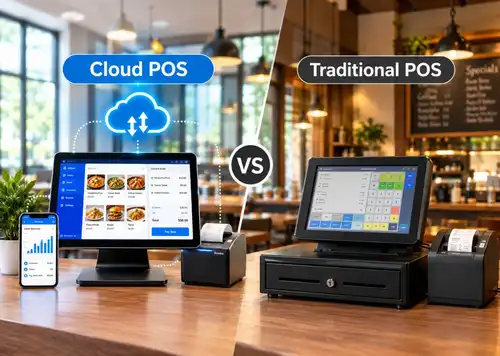
Cloud-based platforms enable real-time access from multiple locations, ensuring that decision-makers always have up-to-date information.
For businesses in the food service industry, exploring solutions like a restaurant POS system can demonstrate how integrated tools support both operational efficiency and financial clarity.
How can accounting education reduce operational overhead?
While automation handles the "heavy lifting" of data entry, the value of a unified financial ecosystem is only fully realized when interpreted by a trained eye. Many business owners worry that the cost of hiring a degree-holding professional will outweigh the savings gained from a new POS system. However, in reality, the opposite is often true- a lack of formal expertise leads to "hidden" costs, such as misclassified expenses, overlooked tax credits, and poor cash flow forecasting.
The gap between "having data" and "understanding data" is where profitability often leaks. Fortunately, gaining this expertise doesn't require a prohibitive investment in traditional, high-cost schooling.
By utilizing a Research.com guide to affordable online accounting degrees, business owners and their managers can find cost-effective pathways to gain the credentials needed to manage complex integrations. This strategic approach allows a business to build in-house financial intelligence, ensuring that the POS-to-accounting pipeline remains accurate, compliant, and most importantly profitable.
Skills That Strengthen Financial Visibility
- Analytical thinking enables managers to interpret operational trends accurately instead of reacting emotionally to short-term fluctuations.
- Technical familiarity with integrated software improves reporting consistency while reducing dependence on manual troubleshooting.
- Cross-department collaboration helps finance, operations, and management teams align decisions using shared performance data.
- Strategic forecasting skills enable businesses to prepare for growth without sacrificing operational stability or cash flow.
Avoiding Common Integration Mistakes
Even strong software can fail when implementation lacks structure or long-term planning.
Common Pitfalls Businesses Should Avoid
- Overcomplicated system architectures often create unnecessary reporting friction and increase maintenance costs over time.
- Poor employee onboarding reduces adoption rates, causing teams to return to disconnected spreadsheets and manual workarounds.
- Ignoring reporting inconsistencies early allows small data problems to compound into larger financial inaccuracies later.
- Failing to monitor integration performance regularly can lead to synchronization delays that distort real-time reporting visibility.
Key Insights
- Integrated operational and financial systems create faster, more accurate visibility into profitability.
- A centralized restaurant POS system helps businesses connect sales performance with real-time financial reporting.
- Strong accounting workflows combined with actionable operational data support smarter long-term business decisions.

Accept, Process, and Profit with Ease!
Streamline Your Online Orders with Plum POS






















-Benefits-&-POS-Guide-150-90faf61de.webp)