What is a POS System?

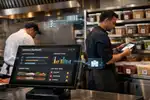
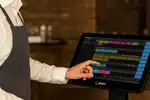
In today's modern world, software for inventory management is quickly replacing traditional inventory management methods. Therefore, if you want to get up to speed with the current time, it's the right time to shift over to digital inventory management. A reliable restaurant POS system can help streamline operations, improve inventory visibility, and support long-term business growth.
Picking the best inventory management software can be a difficult task. Your restaurant POS system should be easy to use and flexible enough to manage your inventory, regardless of size or type. Selecting the best restaurantinventory management software is critical to the success of any restaurant.
The idea of using a restaurant POS system for inventory management has been around for a while, so it's no surprise that these systems are more popular now than ever before. POS systems are especially helpful for small businesses' inventory management because they provide better visibility into stock levels and daily operations.
A Point of Sale (POS) system helps with-
- Inventory control
- Managing menu items
- Tracking stock movement
- Ordering the right inventory
- Monitoring business growth
One of the biggest advantages of a restaurant POS system is scalability. As your business grows, your POS software can grow with you. Restaurant POS systems are also customizable, allowing businesses to choose features based on their operational needs instead of paying for unnecessary functionality.
Why Do You Need an Inventory Management Point of Sale Software?
The restaurant industry has always been fast-paced, competitive, and demanding, but it has become even more challenging in recent years. Restaurants are no longer only competing with each other; they are also competing with food delivery services and changing customer expectations.
In addition, restaurants continue to face increasing labor shortages, which have significantly increased operational costs. Many businesses are now looking for ways to improve efficiency without compromising customer service.
One effective way to address these challenges is by using inventory management POS software.
Restaurant inventory management is more complicated than simply counting the number of items available in storage. Restaurants need to understand-
- How much inventory is being used
- Which products are moving faster
- How much inventory needs to be reordered
- Where food waste is happening
The best point of sale system can improve inventory control and reduce the time spent on inventory-related tasks.
POS Function
| Operational Benefit
|
Inventory management
| Prevents over-purchasing
|
Stock monitoring
| Avoids shortages
|
Reporting tools
| Improves business visibility
|
Warehouse organization
| Streamlines operations
|
Automated tracking
| Reduces manual work
|
Selecting the best inventory management software ultimately depends on your restaurant's operational requirements and business goals. The right system can help improve organization, maintain inventory accuracy, and support overall restaurant efficiency.
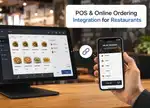
Online Order & Delivery Integration
The restaurant industry has seen a major rise in online ordering and delivery services. With more customers using smartphones and tablets, online food ordering has become a preferred option because of convenience and faster service.
An online ordering system helps restaurants-
- Accept customer orders online
- Track orders in real time
- Manage food preparation
- Sync inventory automatically
- Improve delivery coordination
Integrating online ordering with a restaurant POS system helps improve efficiency and order accuracy. Instead of manually entering orders, restaurants can automate the process and reduce operational delays.
Without integration, restaurants often face issues such as-
- Manual order entry
- Order errors
- Slower service
- Inventory mismatches
A connected online ordering and delivery system helps restaurants streamline operations while improving
customer experience.
Integration Benefit
| Business Impact
|
Faster order processing
| Improves service speed
|
Better order accuracy
| Reduces mistakes
|
Real-time inventory updates
| Improves stock control
|
Centralized order management
| Simplifies operations
|
Better customer experience
| Encourages repeat business
|
As customer expectations continue to evolve, restaurants increasingly rely on integrated online ordering and delivery systems to stay competitive and improve operational efficiency.
What Does a POS System Do?
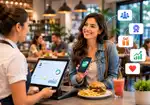
The best way to retain customers is to offer meaningful incentives. Customer loyalty programs are one of the most effective ways to encourage repeat business and build long-term customer relationships. When integrated with a restaurant POS system, loyalty programs become easier to manage and more valuable for both businesses and customers.
A customer loyalty program is a reward system businesses offer to encourage repeat purchases and customer engagement. These programs help create a sense of appreciation and belonging among customers.
Loyalty programs can be as simple as a punch card or as advanced as a points-based rewards system.
Common loyalty program formats include-
- Points-based rewards
- Cashback offers
- Discount programs
- Referral incentives
- Exclusive member promotions
Integrating customer loyalty programs with point of sale software helps restaurants track customer behavior and automate rewards efficiently.
A POS-integrated loyalty system can help restaurants-
Loyalty Feature
| Benefit
|
Customer purchase tracking
| Improves personalization
|
Automated rewards
| Saves staff time
|
Customer engagement insights
| Supports better marketing
|
Repeat visit incentives
| Increases retention
|
Real-time reward redemption
| Improves customer experience
|
A business with a loyal customer base is more likely to achieve long-term success. However, building customer loyalty requires understanding what customers truly value. Customers are constantly looking for better deals, personalized experiences, and rewards that feel worthwhile.
That is where a restaurant POS system becomes valuable. A POS system helps businesses manage restaurant rewards programs while keeping the experience simple and user-friendly.
Loyalty Programs for Restaurants
With the rise of digital services and mobile ordering, customers now expect convenience, personalization, and flexibility from restaurants. A restaurant POS system with integrated loyalty features can help businesses meet these expectations more effectively.
Creating a customer loyalty program is not only about offering discounts. The goal is to create a system that encourages repeat visits and strengthens customer relationships over time.
Instead of treating customers as passive buyers, restaurants can use loyalty programs to create stronger engagement and long-term retention.
Restaurant POS systems integrated with loyalty features can help businesses manage-
- Sales tracking
- Customer purchase history
- Inventory control
- Marketing campaigns
- Customer data
- Financial reporting
Designing a successful loyalty program can be challenging, but the most effective programs usually share three important qualities-
Common Features of Successful Loyalty ProgramsFeature
| Why It Matters
|
Rewards customer engagement
| Encourages repeat visits
|
Offers valuable incentives
| Improves participation
|
Easy to use
| Creates a better customer experience
|
A POS-integrated loyalty program also helps businesses market directly to customers and build stronger customer relationships through personalized offers and promotions.
At its core, a customer loyalty program is a marketing strategy designed to reward customers for repeat purchases. For a loyalty program to succeed, it should-
- Be simple to understand
- Feel rewarding to customers
- Create excitement and engagement
- Encourage repeat purchases
Restaurant POS systems simplify loyalty management by automating rewards, customer tracking, and purchase history monitoring.
Analytics & Reporting
Managing a successful restaurant requires more than processing transactions. Restaurants need access to accurate data and reporting tools that help them understand how the business is performing.
A modern restaurant POS system helps businesses-
- Track inventory
- Monitor cash flow
- Analyze sales performance
- Improve customer service
- Generate detailed business reports
Analytics and reporting are among the most valuable features of restaurant POS systems because they provide real-time visibility into business operations.
Instead of relying on guesswork, restaurant owners can use data to make informed business decisions.
Key Reporting Features in POS Systems
Reporting Feature
| Business Value
|
Sales reports
| Tracks revenue performance
|
Inventory reports
| Improves stock management
|
Financial reports
| Simplifies accounting
|
Customer analytics
| Supports marketing efforts
|
Real-time data access
| Faster decision-making
|
The first step in running a successful restaurant is understanding how the business is performing daily. A POS system provides much more than a traditional cash register because it helps track every sale, monitor inventory movement, and generate financial reports.
Restaurants often struggle to manage reports manually, especially during busy operations. Instead of spending time collecting information from different departments, restaurant owners can access
real-time reports directly from their POS system.
Sales reports are especially important because they provide actionable insights into-
- Best-selling products
- Slow-moving inventory
- Peak business hours
- Customer purchasing behavior
- Revenue trends
Analyzing sales and operational data helps restaurants identify opportunities for improvement and make smarter business decisions.
The Importance of Reports and Analytics DataThe restaurant industry is highly competitive, and businesses must constantly adapt to changing customer behavior and operational challenges. Access to accurate reporting and analytics helps restaurants stay ahead by improving decision-making and operational efficiency.
For example, restaurants need to know-
- When to reorder inventory
- Which products are performing best
- Which items should be promoted
- How inventory levels are changing
- Which menu items generate the highest profits
A restaurant POS system provides this information in real time, helping businesses make proactive decisions instead of reactive ones.
How Reporting Helps RestaurantsIf your restaurant operates across multiple locations, an all-in-one POS system can simplify reporting by centralizing operational data into one platform.
Using POS software also helps restaurants better understand-
- Inventory movement
- Sales trends
- Customer behavior
- Operational performance
- Revenue opportunities
Efficient inventory control and detailed reporting are some of the most valuable advantages of advanced restaurant POS systems.
Operational Area
| Reporting Benefit
|
Inventory management
| Prevents shortages and overstocking
|
Sales analysis
| Identifies top-performing products
|
Customer insights
| Supports targeted promotions
|
Multi-location management
| Centralizes reporting
|
Financial planning
| Improves forecasting accuracy
|
The Benefits of a POS System
Restaurants today rely heavily on technology to improve efficiency and customer experience. Implementing a modern POS system can help restaurants streamline operations while reducing manual processes.
A restaurant POS system typically combines-
- Payment processing
- Inventory management
- Reporting tools
- Customer management
- Order tracking
- Financial reporting
POS software is an essential component of restaurant operations because it helps businesses organize data, manage transactions, and improve overall workflow efficiency.
Benefit
| Impact on Restaurant Operations
|
Faster transactions
| Improves customer service
|
Better inventory control
| Reduces waste and shortages
|
Real-time reporting
| Supports informed decisions
|
Improved order accuracy
| Reduces operational mistakes
|
Mobile accessibility
| Enables remote management
|
Simplified operations
| Saves staff time
|
As restaurant technology continues to evolve, businesses are increasingly adopting POS solutions to improve efficiency, scalability, and customer experience.
POS Apps for Restaurants
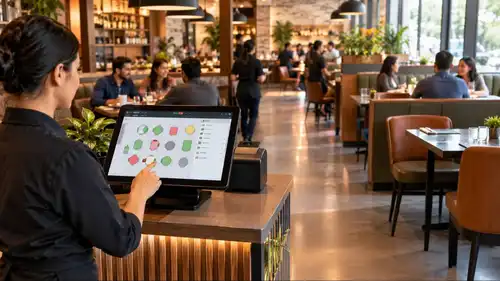
POS apps have become essential tools for modern restaurants. These apps help businesses manage transactions, inventory, reporting, and customer operations directly from mobile devices such as smartphones and tablets.
A POS app allows restaurants to accept payments while simplifying day-to-day operations. Earlier, businesses relied mainly on traditional credit card terminals, but today many restaurants use tablets and mobile devices for payment processing and business management.
POS apps are especially useful because they are-
- Convenient
- Easy to use
- Cost-effective
- Accessible from multiple devices
- Helpful for real-time inventory control
Most restaurant POS apps are compatible with-
- iPads
- iPhones
- Android tablets
- Mobile devices
- Desktop systems
One of the biggest advantages of modern POS apps is cloud-based accessibility. Restaurant owners and managers can access reports, inventory, and sales information from virtually anywhere.
Benefits of POS AppsPOS apps also help restaurants reduce paperwork and simplify operations by centralizing data into one system.
Restaurant owners can use POS apps to-
- Monitor sales performance
- Track inventory movement
- Create sales reports
- Manage customer information
- Access business data instantly
As restaurant technology continues to evolve,
mobile POS systems are becoming increasingly important for businesses that want flexibility and operational efficiency.
Feature
| Benefit
|
Mobile accessibility
| Manage operations remotely
|
Cloud-based software
| Real-time business visibility
|
Inventory management
| Better stock tracking
|
Sales reporting
| Faster decision-making
|
Multi-device compatibility
| Greater operational flexibility
|
Restaurant POS Terminals
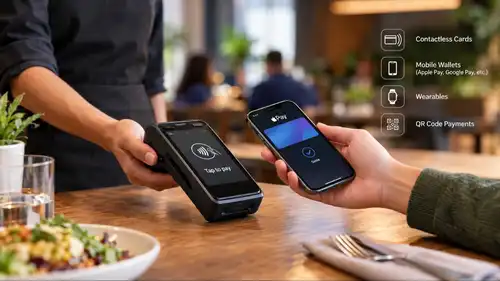
Restaurant POS terminals are essential tools for processing transactions and managing restaurant operations efficiently. These terminals help businesses accept multiple payment types, including-
- Credit cards
- Debit cards
- Cash payments
- Contactless payments
- Mobile wallet payments
A
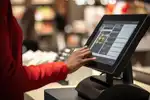
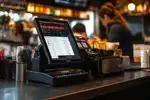
POS terminal acts as the operational hub of a restaurant. Beyond processing payments, it also helps businesses manage inventory, customer orders, and operational reporting.
POS terminals are commonly used at-
- Checkout counters
- Restaurant tables
- Self-service stations
- Bars
- Kitchen operations
The right POS terminal can help restaurants streamline operations while improving both staff efficiency and customer experience.
Tablets and Handhelds for Restaurants
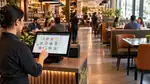
The restaurant industry is increasingly adopting tablets and handheld POS systems to improve service speed and operational efficiency. Tableside ordering and mobile payment processing help restaurants provide faster and more convenient customer experiences.
Earlier POS systems were bulky desktop machines, but modern tablets and handheld devices are compact, powerful, and easy to use. These systems are now widely used across restaurants, retail stores, healthcare, and hospitality businesses.
Tablet and handheld POS systems can help restaurants manage-
- Customer order taking
- Inventory management
- Payment processing
- Product catalog display
- Tableside service
Modern tablet POS systems are designed to simplify operations while improving flexibility for restaurant staff.
Benefits of Tablets and Handheld POS SystemsTablet and handheld POS systems also help restaurants reduce operational delays and improve communication between front-of-house and kitchen staff.
Today, more restaurants are turning to
tablet POS systems because they allow businesses to-
- Serve customers faster
- Improve operational efficiency
- Reduce dependency on fixed terminals
- Manage inventory more effectively
- Process payments from anywhere inside the restaurant
A tablet-based POS system also makes restaurants easier to operate because owners and managers can access business data in real time while improving workflow efficiency.
Kitchen Display System
Ordering food at a restaurant has never been easier, but managing kitchen operations has become more demanding than ever. With restaurants handling dine-in, takeaway, and delivery orders simultaneously, kitchens need systems that improve speed, communication, and efficiency.
A Kitchen Display System (KDS) helps restaurants manage orders digitally by sending orders directly from the POS system to the kitchen display screen. This allows kitchen staff to view incoming orders in real time and coordinate preparation more efficiently.
A Kitchen Display System helps restaurants-
- Improve kitchen communication
- Reduce order errors
- Speed up food preparation
- Organize incoming orders better
- Improve workflow efficiency
Restaurants using integrated POS systems and kitchen display systems can manage operations more smoothly while reducing manual coordination between front-of-house and kitchen staff.
Benefits of Kitchen Display SystemsFeature
| Benefit
|
Real-time order updates
| Faster kitchen communication
|
Digital order tracking
| Reduces order confusion
|
Better workflow management
| Improves kitchen efficiency
|
Reduced paper tickets
| Cleaner operations
|
Faster order processing
| Improves customer experience
|
A well-organized kitchen is essential for restaurant success. Kitchen display systems help restaurants maintain smoother operations while ensuring staff stay aligned during busy service hours.
Self-Service Kiosk
Self-service kiosks have become increasingly popular in restaurants because they offer a faster and more convenient ordering experience. These kiosks allow customers to place orders independently without waiting for staff assistance.
Self-service kiosks are now commonly used in-
- Fast-food restaurants
- Coffee shops
- Convenience stores
- Retail locations
- Quick-service restaurants
A self-service kiosk integrated with a restaurant POS system can help businesses-
- Speed up the ordering process
- Reduce staff workload
- Improve order accuracy
- Offer multiple payment methods
- Enhance customer convenience
As restaurants continue looking for ways to improve efficiency and reduce wait times, self-service kiosks are becoming an important part of modern restaurant operations.
Benefits of Self-Service KiosksCustomers can place orders, customize meals, and complete payments directly through the kiosk, creating a smoother and faster experience.
As the restaurant industry continues evolving, more businesses are adopting self-service kiosks to improve efficiency while serving more customers during busy hours.
Feature
| Benefit
|
Faster ordering
| Reduces customer wait times
|
Customizable orders
| Improves customer satisfaction
|
Multiple payment options
| Better payment flexibility
|
POS integration
| Streamlines operations
|
Reduced staff dependency
| Improves operational efficiency
|
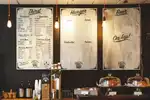
Digital Signage
Digital signage has become an important marketing and communication tool for restaurants. Restaurants use digital signage to display menus, promotions, announcements, offers, and visual content that improves customer engagement.
Digital signage helps restaurants-
- Promote menu items
- Display offers and discounts
- Share restaurant updates
- Improve customer experience
- Increase brand visibility
Restaurant digital signage is especially useful because it allows businesses to update information quickly without printing new materials.
Many restaurants also use digital signage for-
- Drive-thru displays
- Dynamic menu boards
- Promotional campaigns
- Event marketing
- Customer engagement screens
Benefits of Digital SignageDigital signage is particularly effective for drive-thru restaurants because it helps businesses communicate promotions and menu updates more clearly to customers.
As restaurant competition continues to increase, digital signage gives businesses a modern and visually engaging way to improve customer communication and marketing efforts.
Feature
| Benefit
|
Dynamic menu displays
| Easier menu updates
|
Promotional content
| Increases sales opportunities
|
Visual engagement
| Improves customer attention
|
Drive-thru communication
| Faster customer interaction
|
Brand awareness
| Strengthens restaurant visibility
|
What are the different types of POS Systems?
Restaurant POS systems play a critical role in managing inventory, processing payments, generating reports, and improving overall business operations. Modern POS systems combine both software and hardware to help restaurants manage transactions more efficiently.
A POS system can help businesses-
- Process credit and debit card payments
- Manage inventory
- Track sales and reports
- Monitor customer activity
- Improve operational efficiency
Modern POS systems are designed to scale as businesses grow, making them suitable for small restaurants as well as multi-location operations.
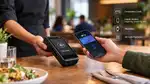
Common Types of POS SystemsMobile POS systems are becoming increasingly popular because they allow restaurants to process transactions directly from smartphones or tablets. Many systems also support contactless payments such as Apple Pay and Google Pay.
POS terminals remain one of the most important components of restaurant operations because they manage transaction processing and connect with other business systems, including inventory and reporting tools.
A reliable POS system helps restaurants-
- Improve customer service
- Speed up transactions
- Reduce operational errors
- Simplify payment processing
- Improve inventory visibility
As restaurant technology continues evolving, businesses are increasingly adopting modern POS systems to improve both customer experience and operational efficiency.
Professional Assistance
Reliable customer support is an important part of any restaurant POS solution. Restaurants rely heavily on technology for daily operations, so responsive support can help businesses avoid operational disruptions and downtime.
Good customer service goes beyond solving technical issues. Restaurants also need support during setup, onboarding, training, and ongoing operations.
Strong customer support typically includes-
- System setup assistance
- Technical troubleshooting
- Staff onboarding support
- Operational guidance
- Ongoing customer service
Restaurants often face unexpected operational challenges, which makes dependable POS support especially valuable during busy service hours.
Smart & Sleek Design
Modern POS terminals are designed to combine functionality with ease of use. The design of a POS terminal is important because it directly affects both customer experience and staff efficiency.
A POS terminal serves as the interface between the restaurant and the customer, so it should be-
- Simple to use
- Fast and responsive
- Easy to navigate
- Visually clean
- Operationally efficient
POS terminals generally include two interfaces-
Interface
| Purpose
|
Customer-facing side
| Payment and interaction experience
|
Merchant-facing side
| Order processing and operations
|
As restaurants continue adopting modern technology, smart POS terminal designs help businesses create smoother customer interactions while simplifying day-to-day operations.
Final Words
Technology won't fix a bad menu or poor service, but it can absolutely stop small operational problems from becoming expensive ones.
A good POS system handles the backend noise so your team can focus on what actually matters- the food and the customer in front of them. Inventory running low? You'll know before it becomes a problem. Peak hours creating bottlenecks? Your data will show you exactly where things are slowing down.
The restaurants that struggle are often the ones still patching things together with spreadsheets, paper tickets, and manual counts. That approach worked once. It doesn't scale, and it leaves too much room for error.
If you haven't evaluated your current setup in the last couple of years, now is a good time. The gap between what older systems offer and what modern POS platforms can do has widened significantly. The question isn't whether you need one, it's whether the one you have is still working hard enough for you.










-Benefits-&-POS-Guide-150-90faf61de.webp)