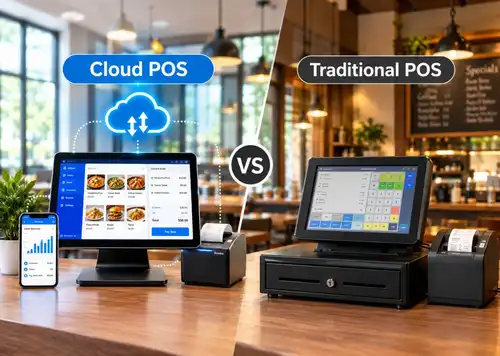
If you're reading this, you're probably not looking for a primer on what a restaurant POS system does; you already run one. You're here because something about Toast stopped working for your operation- the monthly bill crept past what you signed up for, the proprietary hardware boxes you're in, or a support ticket sat open through a weekend rush you couldn't afford to lose. You want to know what else is actually out there, and whether switching is worth the disruption.
This guide compares the strongest Toast competitors on the market in 2026, side by side, so you can see how each one handles offline reliability, kitchen operations, multi-location reporting, and the everyday features that affect a shift. You'll get a decision-focused comparison table, a consistent breakdown of what each system does well and where it falls short, and straight answers to the questions restaurant owners ask most before they migrate.
What Are the Best Toast POS Alternatives in 2026?
The strongest alternatives to Toast POS in 2026 depend on restaurant type and budget, but the most commonly recommended options are-
- Plum POS- A strong choice for full-service and multi-location restaurants that want robust reporting and operational tools without being locked into a single hardware ecosystem.
- Square for Restaurants- Best for small restaurants, cafes, and food trucks that want transparent, low-commitment pricing.
- Lightspeed Restaurant- Strong for full-service and fine-dining operations with layered menus and table management needs.
- Clover POS- Flexible for quick-service and counter-service restaurants that want a simple, widely supported system.
- TouchBistro- Built specifically for table-service restaurants with strong tableside ordering.
- SpotOn Restaurant- A mid-market option with solid marketing and loyalty tools bundled in.
- Revel Systems- Geared toward larger, multi-location operations that need heavy customization.
- NCR Aloha- An enterprise-grade system common in large chains and franchises.
- Epos Now- A budget-conscious option for smaller independent restaurants and retail-adjacent food businesses.
- Oracle MICROS Simphony- Oracle MICROS Simphony is an enterprise-grade cloud POS built for large restaurant chains, hotels, and hospitality brands.
There is no single "best" alternative to Toast; the right one depends on service style, location count, budget, and which operational features matter most to your business.

Accept, Process, and Profit with Ease!
Streamline Your Online Orders with Plum POS
Comparison Table- Toast Competitors at a Glance
Provider
| Loyalty Program
| Payroll Integration
| Accounting Integration
| AI Features
| Customer Support
| Free Trial/Demo
|
Plum POS
| Built-in
| Plum Payroll, ADP & Paycor
| Plum Accounting &
Oracle NetSuite
| AI-assisted demand & inventory insights
| Dedicated onboarding, phone & email
| Live demo (custom quote)
|
Square POS
| Built-in (Square Loyalty)
| Square Payroll add-on
| QuickBooks sync
| Basic AI-driven insights
| Email/chat; phone on paid plans
| Free plan, no demo required
|
Lightspeed POS
| Add-on
| Via integration
| QuickBooks/Xero
| Emerging AI reporting
| Email & phone, 24/7 on higher tiers
| Live demo
|
Clover POS
| App marketplace add-on
| Via third-party apps
| QuickBooks
| Limited
| Varies by reseller
| Demo via reseller
|
TouchBistro
| Add-on
| Via integration
| QuickBooks
| Limited
| Phone/email; 24/7 on some plans
| Live demo
|
SpotOn POS
| Built-in, strong
| Via integration
| QuickBooks
| Marketing/customer AI insights
| Dedicated success manager
| Live demo
|
Revel Systems
| Built-in
| Via integration
| QuickBooks/Xero
| Enterprise analytics
| Dedicated support + phone
| Demo only
|
NCR Aloha
| Add-on
| Available
| Enterprise integrations
| Enterprise AI analytics
| Enterprise dedicated support
| Consultation/demo only
|
Epos Now
| Add-on
| Via integration
| QuickBooks/Xero
| Limited
| Phone/chat, mixed reviews
| Free trial available
|
Oracle MICROS Simphony
| Built-in, enterprise
| Enterprise integrations
| Enterprise integrations
| Oracle AI/analytics suite
| Certified partner network
|
|
Best Alternatives to Toast POS
1. Plum POS
Plum POS is a cloud-based restaurant point-of-sale system built around the operational problems that full-service, casual dining, and multi-location restaurants actually deal with day-to-day- food cost creep, labor drift, and no single source of truth once you're running more than one location. Rather than trying to be everything to every type of food business, Plum leans into deeper restaurant management functionality- the back-of-house visibility operators tend to miss once they've outgrown a more basic system.
Key features- Recipe-level inventory management that ties every dish on the menu to its exact ingredient makeup, so food cost is calculated from what's actually being served, not a rough estimate. Ingredient-level inventory tracking that shows precisely how much of each item is on hand, instead of relying on manual counts that are usually a day or two out of date.
Pros- Strong reporting and inventory depth relative to its price point; automatic stock deduction removes a lot of manual counting work; built with multi-unit operators in mind from day one; labor tools help control one of a restaurant's highest controllable costs.
Cons- Pricing is quote-based rather than published, so comparing exact costs against competitors takes an extra step. Some hardware components are proprietary, so full "bring your own hardware" flexibility isn't guaranteed in every configuration.
Best For- Full-service and casual dining restaurants, especially those operating two or more locations.
Why someone might choose it over Toast- Operators who feel like Toast's pricing and add-on structure got complicated as they scaled, and who want a system that was built with multi-unit reporting as a core feature rather than a bolted-on upgrade, often find Plum's approach more straightforward.
When it may not be the right fit- A single-location food truck or a very small counter-service coffee shop probably doesn't need the depth Plum offers, and a simpler, lower-cost system like Square might serve that use case more efficiently.
2. Square for Restaurants
Square built its reputation on transparent pricing and ease of setup, and Square for Restaurants extends that same philosophy into food service. It's one of the most approachable systems on this list for operators who want to be up and running quickly without a lengthy sales cycle.
Key features- Free-to-low-cost entry tier, built-in online ordering, integrated payment processing, basic inventory tracking, and a large ecosystem of compatible hardware and third-party apps.
Pros- Transparent, published pricing; no long-term contract required on standard plans; works well for businesses that also sell retail items alongside food; fast setup.
Cons- Inventory and labor tools are noticeably lighter than what full-service or multi-location operators typically need; reporting depth is limited on lower tiers; can start to feel restrictive as a concept grows more complex.
Best for- Growing full-service restaurants, casual dining concepts, and multi-location operators looking for a scalable POS with integrated inventory, payroll, labor management, and advanced reporting.
Why someone might choose it over Toast- Operators wary of Toast's contract structure and total cost of ownership often find Square's transparent, pay-as-you-go model easier to budget around, especially in year one.
When it may not be the right fit- Full-service restaurants with complex menus, table management needs, or multi-location reporting requirements tend to outgrow Square's restaurant tools fairly quickly.

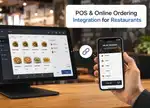
From Click to Kitchen
Handle All Your Online Orders with Plum POS
3. Lightspeed Restaurant
Lightspeed has positioned itself well among full-service and fine-dining operators who need detailed menu management, layered modifiers, and strong table and floor plan tools.
Key features- Advanced menu and modifier management, table-side ordering, detailed inventory tracking, strong integration options with accounting and reservation platforms.
Pros- Well-suited to complex menus and fine-dining service flows; solid reporting; established integration ecosystem.
Cons- Pricing can climb with add-ons; some users report a learning curve during onboarding; not the most cost-efficient option for very small or simple concepts.
Best for- Fine dining and full-service restaurants with detailed menus and hospitality-driven service.
Why someone might choose it over Toast- Operators who find Toast's interface geared more toward speed-of-service than fine-dining nuance sometimes prefer Lightspeed's more hospitality-oriented workflow.
When it may not be the right fit- QSR and fast-casual concepts that prioritize speed over table management usually don't need Lightspeed's depth.
4. Clover POS
Clover is widely resold through banks and payment processors, which has made it one of the most familiar POS brands among small business owners generally, food service included.
Key features- Flexible hardware options, straightforward counter-service workflows, app marketplace for add-on functionality, integrated payments.
Pros- Hardware flexibility is a genuine strength; widely available through many processors, which sometimes means better negotiating leverage on rates; simple to operate for counter-service.
Cons- Inventory and labor tools are basic without add-ons; full-service table management isn't Clover's strong suit; app marketplace fees can add up.
Best for- Quick-service restaurants, coffee shops, and counter-service concepts.
Why someone might choose it over Toast- Businesses that want hardware flexibility and are willing to build functionality through add-on apps rather than an all-in-one restaurant suite often lean toward Clover.
When it may not be the right fit- Full-service dining rooms with complex table management needs typically find Clover underbuilt for that purpose.
5. TouchBistro
TouchBistro was built specifically for table-service restaurants and runs on iPad hardware, giving it a distinctly hospitality-focused feel compared to more generalized POS platforms.
Key features- Tableside ordering, floor plan and table management, menu engineering tools, reporting focused on server and table performance.
Pros- Purpose-built for full-service dining; intuitive tableside workflow; solid reporting on server-level performance.
Cons- Reliant on iPad hardware, which limits flexibility compared to more hardware-agnostic systems; multi-location tools are functional but not as deep as enterprise-grade platforms; internet dependency has historically been a pain point for some users, though offline modes have improved.
Best for- Full-service restaurants, bistros, and bars focused on tableside hospitality.
Why someone might choose it over Toast- Restaurants that want a system built primarily around table service rather than one that also tries to serve QSR and retail use cases sometimes find TouchBistro's focus refreshing.
When it may not be the right fit- Fast-casual or counter-service concepts generally don't need tableside-specific tools and may find better value elsewhere.
6. SpotOn Restaurant
SpotOn has built a niche around bundling marketing and loyalty tools directly into its restaurant POS offering, appealing to mid-market operators who want customer retention tools without stacking on separate software.
Key features- Built-in marketing and loyalty programs, online ordering, reporting with customer engagement analytics, contract flexibility on some plans.
Pros- Marketing and loyalty tools are genuinely well integrated rather than bolted on; reporting includes customer-facing insights, not just sales data; competitive contract terms compared to some enterprise systems.
Cons- Pricing is quote-based and can vary significantly by negotiation; hardware options are more limited than fully open systems; smaller support footprint in some regions.
Best for- Casual dining and mid-size restaurant groups that want marketing and loyalty built into their POS rather than managed separately.
Why someone might choose it over Toast- Operators frustrated with paying separately for marketing/loyalty software on top of their POS subscription often find SpotOn's bundled approach more cost-effective.
When it may not be the right fit- Very small operations that don't need built-in marketing tools may be paying for functionality they won't use.
7. Revel Systems
Revel is geared toward larger, multi-location restaurant operations that need heavy customization and are willing to invest in setup to get a system tailored to their exact workflow.
Key features- Advanced inventory and vendor management, strong multi-location reporting, extensive API access for custom integrations, robust employee management.
Pros- Deep customization potential; strong for complex multi-unit operations; solid inventory depth for operators managing central kitchens or commissaries.
Cons- Setup and onboarding can be involved; pricing tends to run higher, especially with setup fees factored in; may be more system than a small independent restaurant needs.
Best for- Multi-location operators, franchises, and high-volume restaurant groups with the operational complexity to justify a highly customizable platform.
Why someone might choose it over Toast- Larger groups that have specific integration or workflow requirements Toast doesn't natively support sometimes turn to Revel for its API flexibility.
When it may not be the right fit- Single-location independents rarely need this level of customization, and the setup investment usually isn't worth it at that scale.
8. NCR Aloha
Aloha has been a fixture in enterprise restaurant technology for a long time, particularly among large chains and franchise systems that need standardized, centrally managed POS deployments across many units.
Key features- Enterprise-grade centralized management, deep franchise-level reporting and permissions, extensive third-party integration support, high system reliability at scale.
Pros- Proven track record in large, high-volume environments; strong centralized control across many locations; extensive support infrastructure built for enterprise clients.
Cons- Largely proprietary hardware and enterprise pricing structure make it a poor fit for small or independent restaurants; implementation timelines are longer; it typically requires dedicated IT support to manage effectively.
Best for- Large franchises and national or regional chains with the scale to justify enterprise-level infrastructure.
Why someone might choose it over Toast- Franchise systems that need rigid standardization across dozens or hundreds of units sometimes find Aloha's enterprise controls better suited to that governance model than Toast's more mid-market-oriented tools.
When it may not be the right fit- Independent restaurants and small groups will likely find the cost and complexity far beyond what they need.
9. Epos Now
Epos Now positions itself as a budget-friendly POS option that serves both retail and restaurant businesses, making it a reasonable fit for smaller food operations, especially those with a retail component.
Key features- Lower-cost subscription tiers, hardware flexibility, basic inventory and reporting tools, integrations with third-party apps for expanded functionality.
Pros- Lower entry cost than most competitors on this list; flexible hardware; works reasonably well for hybrid retail-food businesses.
Cons- Reporting and inventory tools are basic compared to restaurant-specific platforms; customer support has received mixed reviews in some markets; not built with complex full-service restaurant workflows in mind.
Best for- Small independent restaurants, cafes, and food-and-retail hybrid businesses on a tighter budget.
Why someone might choose it over Toast- Operators prioritizing lower upfront and ongoing costs over deep restaurant-specific functionality often consider Epos Now a practical starting point.
When it may not be the right fit- Growing full-service restaurants or multi-location operators will likely outgrow it fairly quickly.
10. Oracle MICROS Simphony
When restaurant operators start looking beyond traditional restaurant POS systems, Oracle MICROS Simphony is often one of the first enterprise platforms that comes up. It's the same platform used by global brands such as Wendy's and Taco Bell, giving it the infrastructure to support hundreds of locations, multiple brands, and highly complex operations.
Key Features- Oracle MICROS Simphony offers centralized menu and pricing management across multiple locations, allowing operators to roll out changes instantly across an entire organization. The platform includes kitchen display systems (KDS), workforce scheduling tools, loyalty capabilities, and advanced reporting features designed for enterprise teams.
Pros- Built to handle enterprise-level complexity and scale. Excellent support for multi-location and multi-brand operations. Advanced reporting and analytics capabilities. Strong offline reliability, with kitchen displays and printers continuing to operate on local networks during internet outages.
Cons- Implementation can be lengthy and complicated. Staff training requirements are significantly higher than those of most restaurant POS systems. Costs increase quickly once hardware, support, and integrations are added. Even minor post-launch configuration changes may require outside support or certified Oracle partners.
Best For- Oracle MICROS Simphony is best suited for Large restaurant groups, Franchise organizations, Hotels and resorts, stadiums, entertainment venues, and Hospitality businesses operating multiple revenue centers. Organizations with internal IT teams or centralized franchise support typically get the most value from the platform.
Why Choose Oracle MICROS Simphony Over Toast? For businesses operating inside hotels, resorts, casinos, or stadium environments, Simphony delivers capabilities that Toast simply wasn't designed to provide. It also offers significantly stronger centralized management for franchise groups that need standardized operations across dozens or even hundreds of locations.
Why It May Not Be the Right Fit? For independent restaurants or smaller chains, Oracle MICROS Simphony is often more platform than they actually need. The implementation timeline, learning curve, and total ownership cost can be difficult to justify when more straightforward systems provide similar core restaurant functionality with less complexity.
How to Choose the Right Toast Alternative for Your Restaurant
There's no universal "best" system; the right choice depends on how your restaurant actually operates day to day. A few practical starting points-
By restaurant size- Small, single-location restaurants generally benefit from simpler, lower-cost systems like Square or Epos Now. Growing restaurants and multi-location operators often benefit more from Plum POS, Lightspeed, or SpotOn, which provide deeper inventory management, labor tools, and reporting to support expansion.
Full-service restaurants- Table management, course timing, and server-level reporting matter more here. TouchBistro excels at tableside service, Lightspeed is ideal for complex menus and fine dining, while Plum POS stands out for restaurants that want stronger inventory management, labor optimization, food cost tracking, and multi-location visibility.
QSRs and fast-casual concepts- Speed of service and simple order flows matter more than table management. Square and Clover are excellent choices for smaller quick-service restaurants because of their simplicity. Growing QSR chains that need centralized reporting, inventory control, and labor management may benefit from Plum POS as they expand.
Cafes and coffee shops- Systems with strong retail-adjacent functionality, such as Square and Epos Now, in particular, tend to work well since many cafes sell packaged goods alongside prepared drinks and food.
Franchises and multi-location operators- Centralized reporting, permission structures across locations, and consistency in menu management become critical. Plum POS is particularly well suited for growing restaurant groups that need centralized inventory, payroll, labor scheduling, and reporting across locations. Larger enterprise organizations may prefer NCR Aloha or Oracle MICROS Simphony, while Revel is a strong option for highly customized deployments.
Food trucks and mobile concepts- Hardware flexibility and low monthly commitment usually matter more than deep reporting. Square is a common choice here for exactly that reason.
Budget considerations- Compare the total cost of ownership, not just the monthly subscription. Consider hardware, payment processing, implementation, and add-on modules. While some systems appear cheaper initially, platforms like Plum POS can provide better long-term value by including advanced inventory, labor management, and reporting capabilities that may otherwise require additional software.
Growth plans- If you're planning to open additional locations, choose a platform that can scale with your business. Plum POS is designed for growing restaurant groups with centralized reporting, inventory management, and labor tools, helping reduce the need for another POS migration as your business expands.
Final Thoughts- Choosing What Actually Fits Your Restaurant
There's a temptation, when you're comparing POS systems, to look for the one with the longest feature list and assume it's the smartest buy. In practice, the opposite is usually true. The best system for your restaurant is the one that matches how you actually operate, not the one with the most add-ons you'll never touch or the most impressive demo.
None of the systems covered here are universally "better" than Toast. Each one solves a different problem, for a different kind of restaurant, at a different point in its growth. The smartest move isn't picking whichever name comes up most often in reviews; it's getting honest about your service style, your budget, your current pain points with Toast, and where you expect your restaurant to be in two or three years. From there, the shortlist narrows quickly.
Choosing the right Toast alternative isn't just about replacing your POS; it's about finding a platform that supports how your restaurant operates today and where it's headed tomorrow. If you're looking for a solution that combines POS, inventory management, payroll, labor scheduling, and advanced reporting in one platform, Plum POS is worth exploring. Schedule a personalized demo to see how it can help reduce food costs, improve labor efficiency, and simplify multi-location operations.

Online Orders Made Easy
Plum POS Ensures Seamless Processing

















-Benefits-&-POS-Guide-150-90faf61de.webp)