Providing a personalized experience is essential for truly winning over your consumers and keeping them coming back for more. In today's environment, where customers interact with companies both online and in-store, delivering a consistent experience is more crucial than ever.
Combining online and offline operations allows you to satisfy client expectations at every touchpoint.
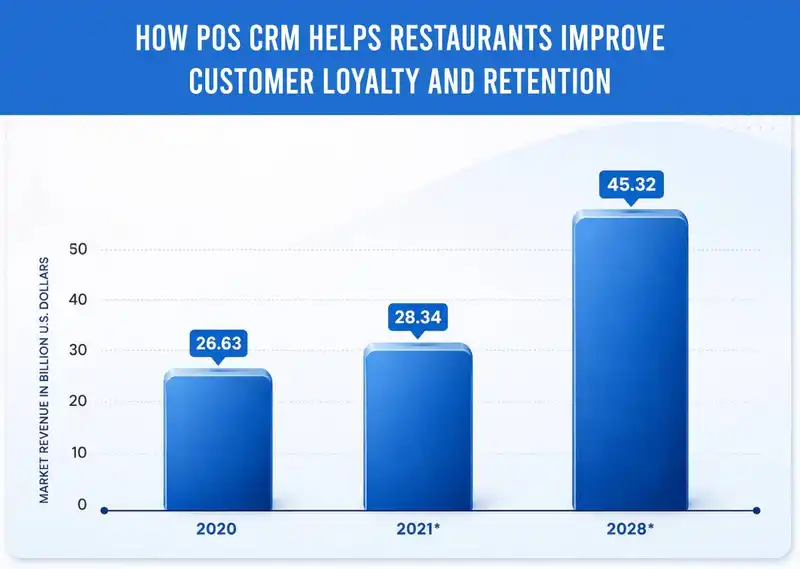
Furthermore, the worldwide interactive kiosk market is expected to total45.32 billion US dollars by 2028. This emphasizes the role of technology in improving customer experiences.
In this blog, we'll discuss common POS loyalty programs, how to establish them in your restaurant, and the advantages of incorporating a customer loyalty restaurant POS system.

Accept, Process, and Profit with Ease!
Streamline Your Online Orders with Plum POS
Why Customer Loyalty Matters More Than Ever
Customer loyalty in restaurants is the difference between steady growth and constant struggle. New customers are important, but loyal customers keep the business stable. They visit more often, spend more, and recommend your restaurant to others.
When restaurants focus on customer retention, they reduce marketing costs and increase lifetime value. Loyal guests already trust you. All they need is a reason to return.
This is exactly where POS CRM for restaurants becomes valuable. It helps restaurants move from random visits to consistent relationships.
4 Types of Restaurant POS Loyalty Programs
Building customer loyalty in restaurants is easier when you have the right system in place. A modern POS CRM for restaurants allows you to create loyalty programs that feel personal, simple, and rewarding. When loyalty programs are managed through a POS CRM, they run smoothly in the background and help improve repeat visits without adding extra work for staff.
Below are the most effective loyalty program types that restaurants can run using a smart POS CRM, including platforms like Plum POS, along with their pros and cons.
1) Points-Based POS Loyalty Program
A points-based program is one of the most popular options for restaurants. Customers earn points every time they place an order, and these points can later be redeemed for rewards.
With a POS CRM for restaurants, points are tracked automatically across dine-in, takeaway, and online orders. This automation eliminates the necessity for manual tracking and guarantees that customers obtain precise rewards according to their purchases.
Pros-
- The idea of accumulating points with each transaction is straightforward and well-known. Customers easily grasp the system's functioning, which raises the chances of their involvement in the program.
- As customers aim to gather more points and meet reward thresholds, they are more inclined to come back and make more purchases.
- Contemporary POS systems automatically monitor points and track customer engagement. This removes the need for staff to do manual tasks and guarantees that loyalty rewards are computed correctly.
- Restaurants can leverage POS data to examine buying habits and customize promotions or rewards for regular customers, thereby enhancing lasting relationships.
Cons-- When customers have to gather excessive points before obtaining a reward, they might perceive the benefits as taking too long to attain, which can diminish their motivation to keep participating.
- When customers overlook their points or don't receive updates, notifications, or promotional messages, participation in the program might slowly decrease.
- To maintain the loyalty program's activity, restaurants must advertise it via receipts, emails, app alerts, or in-store displays, ensuring customers stay informed about the rewards they can obtain.
2) Tiered POS Loyalty ProgramA tiered loyalty program rewards customers based on how often or how much they spend. Customers move up levels such as Silver, Gold, or Platinum, unlocking better rewards at each stage.
Pros-- Tiered programs offer a structured advancement system that encourages customers to achieve the subsequent level. Transitioning from one level to another provides customers with a feeling of achievement and acknowledgment.
- Customers frequently boost their order value or come more often to reach the next level. This may result in increased average order values and steadier revenue for the restaurant.
- Customers who attain upper tiers frequently feel appreciated and acknowledged by the brand. Unique advantages or VIP-style rewards enhance the emotional bond between the diner and the eatery.
- Rewards increase with every level, motivating customers to continuously come back to preserve or enhance their tier status.
Cons-- If the criteria for achieving each level are not clear, customers might get confused about how the system operates or what advantages they obtain.
- Customers who visit infrequently may perceive that attaining higher tiers is unachievable, potentially diminishing their incentive to get involved.
- Restaurants need to clearly outline how customers transition between tiers and the rewards they earn. Customers might not completely grasp the program's value without clear communication via receipts, apps, or email notifications.
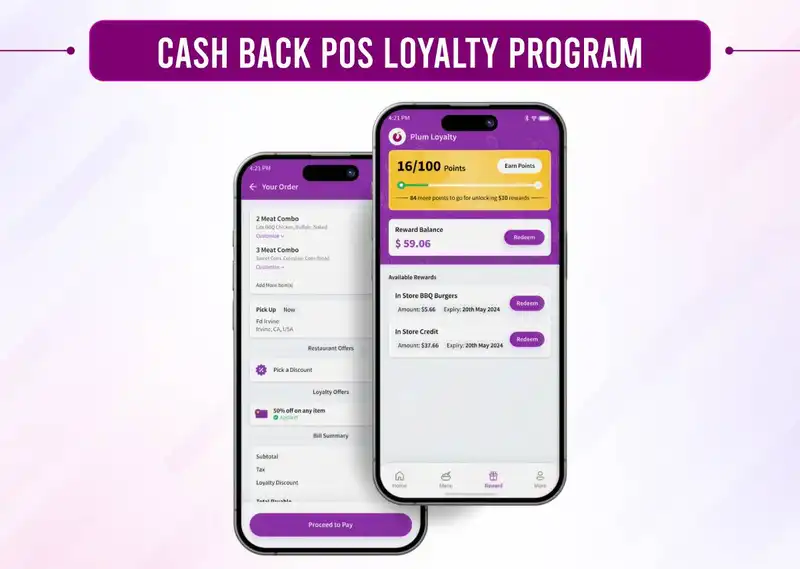
3) Cash Back POS Loyalty Program
A cash back program offers customers a percentage of their spending back as credit for future visits. This is a simple and attractive reward structure for many diners.
Pros-
- Cash back programs are simple. Customers quickly grasp that a portion of their purchases will be refunded as credit, making the program simple to clarify and advertise.
- Since the reward is in the form of monetary credit, customers can easily recognize its worth. This clarity frequently boosts involvement and engagement in contrast to more complicated loyalty programs.
- Customers are encouraged to come back and utilize the credit they've accumulated. This establishes a natural loop of returning visits and continuous customer interaction.
- Contemporary POS systems automatically compute and save cash back rewards, minimizing the likelihood of manual tracking errors and guaranteeing precise reward totals.
Cons-- If the cash back percentage is excessively high or not aligned with pricing strategies, it could lower the restaurant's profit margins.
- Cash back rewards are based on transactions rather than experiences. In contrast to tiered programs, they might not foster the same level of accomplishment or brand devotion.
- Certain customers might engage primarily for discounts or credits instead of enduring brand loyalty, complicating efforts to establish stronger customer connections.
With Plum POS Loyalty, restaurants can automate credits, run special cash back promotions, and track redemptions easily. This method helps improve customer retention with POS systems by giving customers a clear reason to return.

From Click to Kitchen
Handle All Your Online Orders with Plum POS
4) Subscription-Based POS Loyalty Program
Subscription-based loyalty programs allow customers to pay a monthly or yearly fee for exclusive benefits. These may include free items, special pricing, or member-only access.
Pros-
- Since customers pay a monthly or annual fee, restaurants obtain a consistent flow of revenue no matter how frequently members utilize their advantages.
- Membership programs offer a VIP experience that makes customers feel they belong to a unique group with exclusive benefits.
- As members aim to enhance the worth of their subscription, they are more inclined to frequent the restaurant consistently.
- Contemporary POS systems can autonomously handle subscriptions, monitor member engagement, and implement rewards at checkout, minimizing manual tasks for employees.
Cons-- Customers will subscribe only when the advantages clearly surpass the expense. Restaurants need to create appealing incentives to ensure the program is valuable.
- Subscription programs are most effective in businesses that have returning customers. Establishments that primarily serve one-time or infrequent guests may find it challenging to gain subscribers.
- Restaurants need to clearly outline the advantages of membership, costs, and the functioning of rewards. Lack of clear communication can lead customers to not fully grasp the benefits of the subscription
What are the 3 different types of CRM?
Understanding the various forms of CRM allows you to select a system that meets your restaurant's demands. Restaurant customer relationship management often falls under three categories-
- Operational CRM- Automates and improves front-end procedures, including reservations, guest interactions, and marketing communication. Perfect for maintaining daily client touchpoints.
- Analytical CRM- Focuses on analyzing customer data to acquire insights into their behavior, preferences, and trends. Perfect for long-term strategy, menu planning, and campaign analysis.
- Collaborative CRM- Improves communication across departments (front-of-house, back-of-house, and marketing) by exchanging unified guest data in real time.
A restaurant CRM often combines elements of all three, providing a comprehensive solution that addresses a wide range of operational and strategic needs.
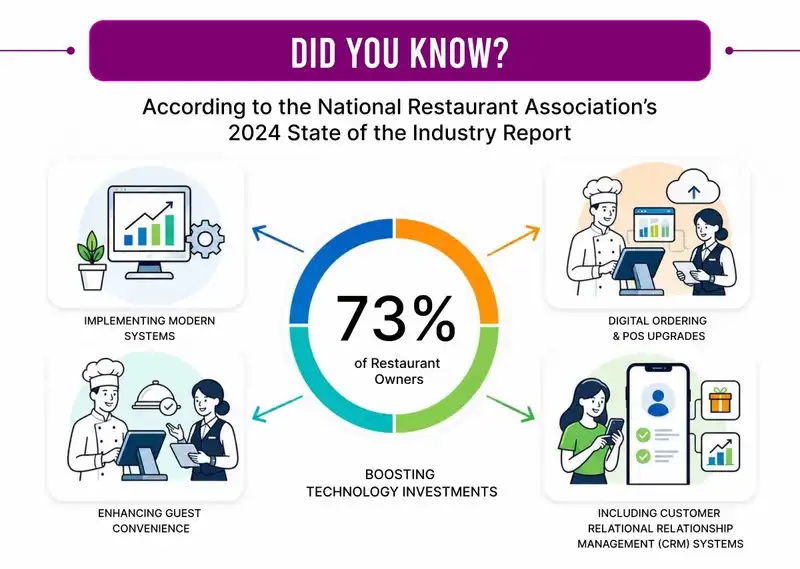
This shift highlights the growing reliance on digital tools to meet evolving guest expectations and improve operational efficiency.
Key Advantages of POS and CRM Integration for Restaurants
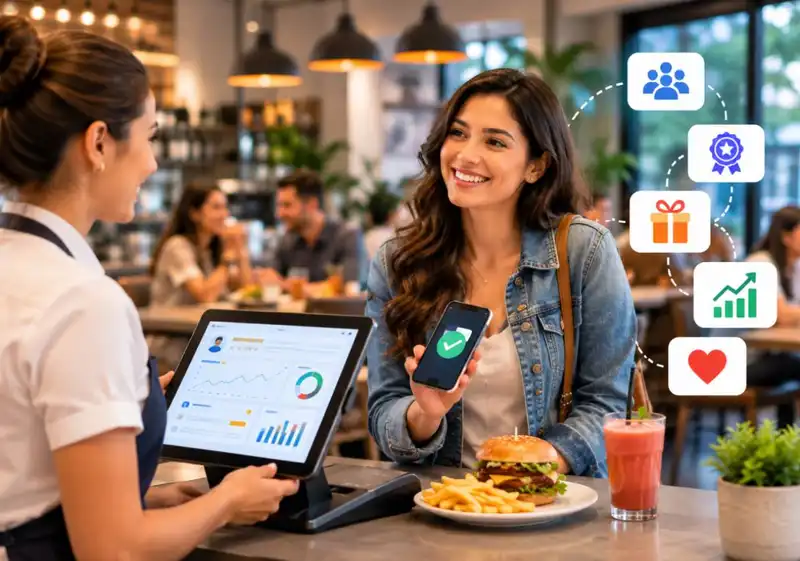
Enhancing Customer Experience
Combining these two technologies enables businesses to remember customer preferences, previous orders, and dining habits.
- Remembering customer preferences
Restaurants can track what customers usually order, making it easier to personalize recommendations and improve their overall dining experience. - Personalized suggestions from staff
With access to customer history, staff can recommend menu items or promotions that match a customer's past orders and preferences. - Faster service for repeat guests
Returning customers can be served more quickly because their details, favorite items, and order patterns are already available in the system.
Customers are satisfied, and their eating experience is improved when they receive customized offers and loyalty benefits.
Streamlining OperationsIt eliminates the need for human data entry, automates order processing, and improves communication between the front-end and back-end operations.
- Faster service
Orders move automatically between systems without manual entry, which helps staff process and prepare orders more quickly during busy hours. - Fewer mistakes
Automated order transfer reduces the chances of human errors such as incorrect items, quantities, or missed special instructions. - Improved product management
Inventory and menu availability update in real time, allowing restaurants to manage stock levels more accurately and avoid selling unavailable items.
Restaurants that manage hectic situations successfully and collaborate may serve customers faster and with more satisfaction.
Improving marketing effortsRestaurants may even leverage consumer information from their CRM to create an effective marketing strategy based on what customers buy and prefer.
- Sending automated emails
Restaurants can automatically send emails with promotions, order updates, or loyalty rewards, helping keep customers engaged without requiring manual effort. - SMS messages
SMS notifications allow restaurants to quickly reach customers with time-sensitive offers, order alerts, or reminders that encourage them to visit again. - Special incentives encourage clients to return
Personalized offers such as discounts, loyalty rewards, or birthday deals motivate customers to come back and place another order.
Businesses may improve their advertising tactics by leveraging real-time information. This will lead to more engagement and improved returns on their marketing spending.
Boosting Loyalty ProgramsIntegrated systems enable restaurants to track client visits and sales, making it simple to provide personalized loyalty rewards.
- Loyalty programs
Loyalty programs reward customers for their regular purchases and motivate them to continue ordering from the same restaurant. - Personalized rewards
Restaurants can offer targeted rewards such as discounts, free items, or points based on customer preferences and purchase behavior.
These exclusive offers help keep members coming back. Customers who feel appreciated are more inclined to remain with the brand and return.
Optimal Decision MakingUp-to-date information enables restaurant operators to make better decisions regarding their menu, staff, and prices.
- Understanding what customers want
Sales and order data reveal which menu items are most popular, helping restaurants adjust their menu to better match customer preferences. - How sales are going allows organizations to respond swiftly
Real-time reporting helps managers monitor daily performance and quickly respond to changes in demand or slow sales periods. - Cut waste and boost revenues
Accurate data helps restaurants manage inventory more effectively, reducing food waste while improving overall profitability
This data-driven strategy promotes long-term prosperity and security in a competitive marketplace.
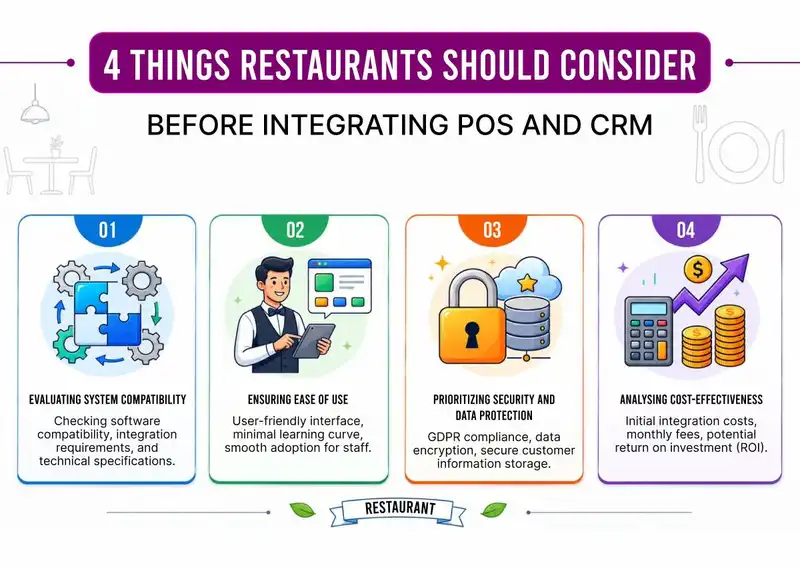
4 Things Restaurants Should Consider Before Integrating POS and CRM
1) Evaluating System Compatibility
Make sure the systems are compatible. The connectivity between them should allow for simple information sharing. Check to see if the POS system integrates with other CRM software or has its own CRM capabilities. A good system prevents data loss, ensures that everything operates smoothly, and streamlines tasks.
2) Ensuring Ease of Use
A user-friendly interface enables staff to easily adjust to the new technology. Complex software may slow things down and take extensive training to utilize properly. Restaurants should select a basic interface that allows them to easily collect orders, track client information, and create reports.
3) Prioritizing Security and Data Protection
Keeping client information safe is a major security risk. Restaurants should choose a system that has robust security features, such as encryption and user authentication. To avoid problems, it is critical to adhere to accurate data protection policies. Secure payment methods and restricted access can help protect sensitive consumer and corporate information.
4) Analyzing Cost-Effectiveness
Restaurants should examine all integration expenses, including software, equipment, and maintenance fees. Some systems provide inexpensive cloud options, while others need a significant upfront commitment. Consider long-term advantages, such as automation and increased speed, to decide whether the expenditure is in line with corporate objectives and budget.
Why Plum POS Stands Out in Restaurant CRM Solutions
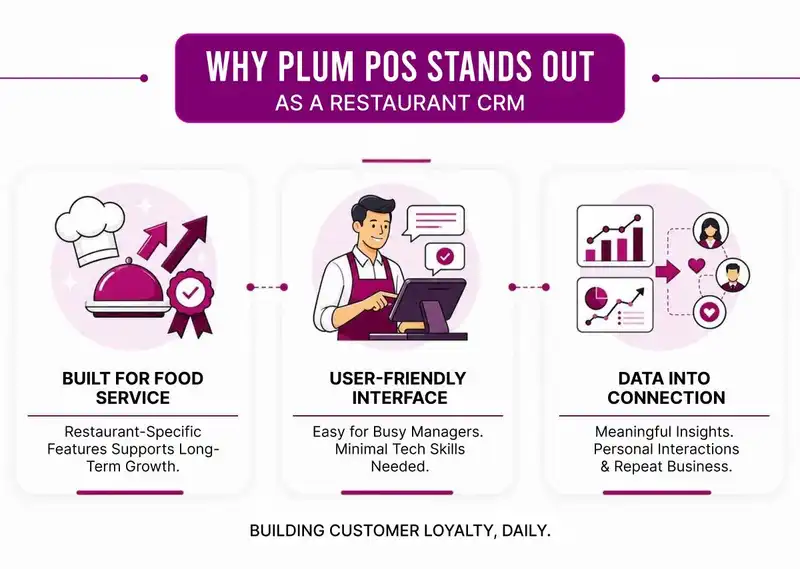
Among the several restaurant CRM choices available, Plum POS stands out with restaurant-specific features created with food service organizations in mind, making it a strong POS CRM for restaurants that directly supports customer loyalty in restaurants and long-term growth.
Even busy restaurant managers with minimal technological skills will find Plum POS's UI easy to use. The system focuses on useful technologies that increase client involvement without needing complicated setup or maintenance, which is exactly what restaurants expect from a reliable POS CRM built to support daily operations and restaurant customer retention.
What distinguishes Plum POS is its entire approach to connection development. Beyond data collection, Plum POS converts consumer data into meaningful insights that enhance relationships and generate repeat business, helping restaurants consistently improve customer retention with POS driven strategies. This approach strengthens customer loyalty in restaurants by ensuring every interaction feels informed and personal.
Conclusion
Integrating POS and CRM with Plum POS allows businesses to better serve consumers, provide personalized experiences, and improve operations. They can manage orders more efficiently and provide targeted promotions, resulting in more client satisfaction and loyalty. In today's digital world, restaurants that adopt this strategy have an advantage, which leads to repeat customers and long-term success in a changing business.

Online Orders Made Easy
Plum POS Ensures Seamless Processing











-Benefits-&-POS-Guide-150-90faf61de.webp)