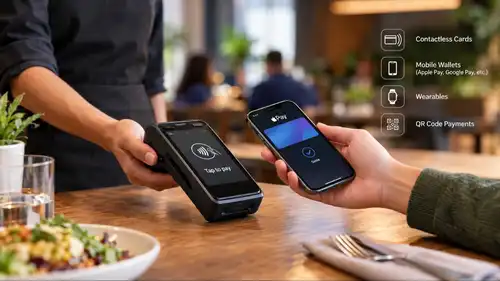
Football season changes the rhythm of a restaurant. Foot traffic shifts. Phones ring differently. Your busiest hours might no longer be Friday and Saturday dinner; they might be Sunday afternoon, or whatever night your city's team plays on Monday. If you've run a restaurant through even one NFL or college football season, you already know this. What you might not have is a system for it.
That's the difference between restaurants that treat football season as a happy accident and restaurants that treat it as a revenue engine. This blog is built for the second group or for owners who want to join it.
Football season isn't just "busy season"; it's a predictable, recurring, 18-to-20-week window where consumer behavior shifts in ways that directly benefit food and beverage businesses.
A few things happen every fall that restaurant operators should pay attention to-
- Group dining spikes. Football is a social sport. People rarely watch alone, and groups of four, six, or twelve people spend more per visit than solo diners.
- Takeout and delivery orders surge on game days, particularly for wings, pizza, shareable platters, and anything that travels well to a living room.
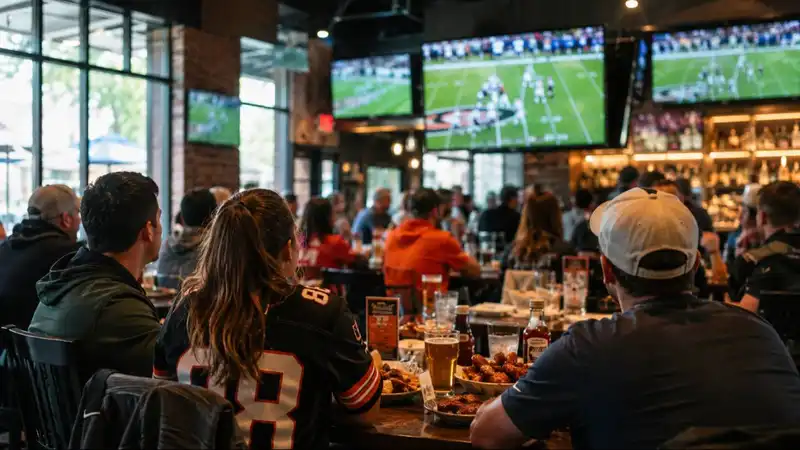
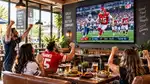
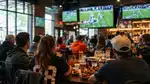
- Local sports bars and casual dining spots see some of their highest weekly traffic of the entire year, especially during marquee matchups, rivalry weekends, and the playoffs.
- Consumers plan. Unlike a random Tuesday, people know exactly which Sundays their team plays. That predictability is a gift; it means your marketing can be planned weeks in advance instead of scrambled together the morning of.
The restaurants that win during football season aren't necessarily the ones with the best food. They're the ones who show up consistently in the right places- social media, local search, email, text with an offer that matches what a hungry, distracted, game-watching customer actually wants. That's the essence of football season restaurant marketing- meeting people where their attention already is.

Accept, Process, and Profit with Ease!
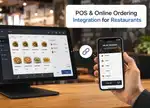
Streamline Your Online Orders with Plum POS
Every strong football season playbook for restaurants starts with a calendar, not a promotion. Before you design a single special, map out the season.
Pull the schedule for whichever teams matter most to your local customer base- the NFL, your regional college team, or both. Mark-
- Home openers
- Rivalry games
- Prime-time and nationally televised matchups
- Playoff weekends
- The Super Bowl
These dates are your highest-leverage marketing moments. A rivalry weekend in a college town can outperform a random NFL Sunday by a wide margin, so don't build your whole plan around professional football if your town bleeds a different color.
Once the calendar is set, build your marketing around three phases-
- Pre-season (August)- Warm up your audience. Announce your football season restaurant promotions before the first kickoff, not after.
- In-season (SeptemberDecember)- Consistent weekly promotion, content, and reminders.
- Playoffs and championship (JanuaryFebruary)- Your biggest push of the year, worthy of dedicated marketing spend and staffing.
Treating football season restaurant marketing as one long campaign rather than a series of disconnected weekend specials is what separates restaurants with real momentum from ones that are just reacting week to week.
Not every promotion is worth running. Here are the ones that consistently perform well for restaurants, bars, and casual dining concepts during football season.
Game Day Specials Tied to the Score
Score-based promotions create urgency and shareability. Think- "$1 off wings for every touchdown the home team scores" or "free nachos if they win by 20+." These promotions get talked about, photographed, and posted, which means free marketing on top of the traffic they drive.
Group and Watch Party Packages
Bundle food for groups. A "Game Day Feast for 6" at a flat price removes the friction of ordering individually and increases average check size. This is one of the simplest football season restaurant promotions to execute, and it works because it mirrors how people already order for parties; they just don't want to do the math.
Happy Hour Extensions on Game Days
If your happy hour normally ends at 6 p.m., extend it through kickoff on game days. It's a low-cost way to pull in the pre-game crowd who'd otherwise grab a drink somewhere else before heading to a watch party.
Loyalty Perks for Regulars
Reward the customers who show up every single Sunday. A punch card, a points system, or a simple "watch 5 games with us, get the 6th meal free" builds the kind of repeat traffic that carries a restaurant through the slower months once the season ends.
Fantasy Football and Pool Tie-Ins
Sponsor a local fantasy league or run your own free-to-enter pick'em contest with a prize like a gift card or a free meal. This is inexpensive, generates real engagement, and gives people a reason to check in with your restaurant weekly, not just on game day.
Delivery and Takeout Game Day Bundles
Not everyone is watching at your restaurant. Build takeout bundles specifically designed for at-home viewing- family-style portions, easy reheating, minimal mess. This captures the customer who wants your food but not your dining room.
The common thread across all of these football season restaurant promotions- they reduce decision fatigue for the customer and give them a clear, easy reason to choose you over the restaurant down the street.
Marketing Channels Worth Your Time
You don't need to be everywhere. You need to be consistent in the places your customers already look.
Social Media
Post your weekly game day specials early in the week, not the morning of. Use short video for wing platters, drink specials, and packed dining rooms during big games; social proof sells better than any caption. Stories and reels with a countdown to kickoff perform especially well because they tap into the anticipation people already feel.
Local SEO and Google Business Profile
Update your Google Business Profile with game day hours, especially if you're opening early for a noon kickoff. Add photos from past game days. Respond to reviews. A surprising number of restaurants lose potential game day traffic simply because their listed hours don't match reality on a Sunday.
Email and SMS
This is the most underused channel in football season restaurant marketing, and it's often the highest converting. A simple weekly text "Bears play at 1 today. Wings are half off till kickoff." takes thirty seconds to send and reliably brings people through the door. Segment your list if you can- separate "game day regulars" from your general email list so your messaging feels relevant, not spammy.
Local Partnerships
Partner with a nearby brewery, a sports bar without a kitchen, or a youth sports league. Cross-promotion during football season costs little and expands your reach to an audience that's already primed for the exact experience you're offering.

From Click to Kitchen
Handle All Your Online Orders with Plum POS
Game Day Operations- Where the Playbook Either Works or Falls Apart
Marketing gets people in the door. Operations decide whether they come back.
Football Sundays are unforgiving. You'll get a wave of orders in the ten minutes before kickoff, another wave at halftime, and a final wave when the game ends and everyone wants their check at once. If your systems can't handle that rhythm, all the marketing in the world won't save the experience.
Staffing for Predictable Chaos
Football season staffing isn't like a normal weekend. Schedule extra hands specifically around kickoff and halftime, when order volume spikes hardest. Cross-train staff so your kitchen and front-of-house can flex depending on where the bottleneck actually is that day. Sometimes it's the fryer, sometimes it's the bar, sometimes it's just getting checks out fast enough to turn tables before the next game starts.
Menu Engineering for Speed
Simplify your game day menu. Complicated dishes that take fifteen minutes don't work when you're slammed with a room full of people who want their food before the next series. Build a focused game day menu around items your kitchen can produce quickly and consistently, even under pressure.
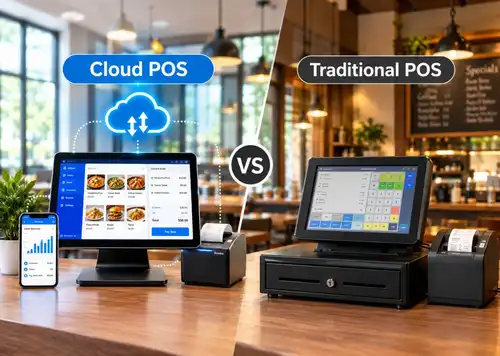
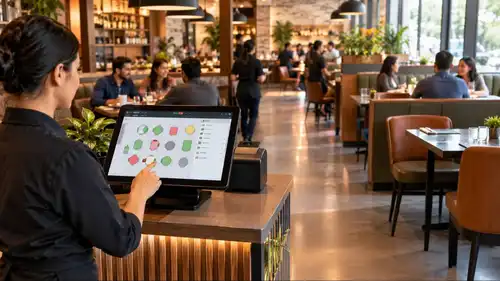
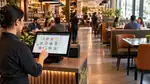
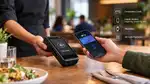
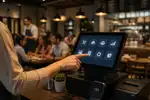
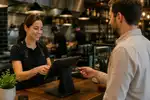
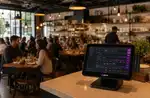
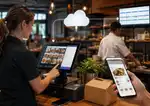
This is where a lot of restaurants underestimate what they're up against. A modern restaurant POS system isn't just for ringing up orders during football season, it's the difference between a smooth Sunday and a chaotic one.
Here's what actually matters at the register and in the kitchen when volume triples in a two-hour window-
- Speed of order entry. A slow or clunky POS adds seconds to every transaction and seconds compound fast when you're running fifty tables at once.
- Split checks and group orders. Football crowds mean big tables and complicated bills. A restaurant POS system that handles fast, accurate check-splitting without a manager having to step in saves real time.
- Kitchen display integration. During peak game day volume, tickets need to hit the kitchen instantly and clearly, with modifiers that don't get lost in translation.
- Real-time sales and inventory tracking. Running out of wings at halftime during the biggest game of the year is a preventable problem if your POS system is tracking depletion in real time.
- Reporting that actually informs next week's plan. After each game day, your POS should tell you what sold, what didn't, and when your peak windows actually hit, not just guesswork based on how busy the floor felt.
This is exactly the kind of operational reliability that
Plum POS is built around- fast order entry, smooth check-splitting for group tables, and reporting that shows you exactly how each game day performed, so your football season playbook gets sharper every week instead of staying static. You don't need to overhaul your entire operation to benefit from this. You need a system that keeps up when everything else in the building is moving fast.
A useful playbook isn't a document you write once in August and forget. It's a repeatable weekly rhythm.
Monday/Tuesday- Review the past weekend's numbers. What sold? What ran out? What promotion underperformed? Use your restaurant POS system reporting to make this fast instead of anecdotal.
Wednesday- Announce next weekend's specials across social media and email/SMS. Confirm staffing needs based on the matchup's expected draw.
Thursday/Friday- Prep inventory based on projected demand. Order extra of whatever sold out last week.
Saturday- Final staffing confirmation, menu prep, and a walkthrough to make sure signage, TVs, and seating are ready for tomorrow.
Sunday (or game day)- Execute. Track real-time sales through your POS so you can spot supply issues before they become a problem mid-game.
Repeating this cycle every week is what turns football season restaurant marketing from a scattered set of ideas into an actual playbook something your team can run without you having to reinvent it every Thursday afternoon.
Waiting too long to announce promotions. If your Sunday special goes live on Instagram Sunday morning, you've already missed the customers who plan their weekend on Wednesday or Thursday.
Ignoring away games and road trips. If the local team is playing away, your regulars still want to watch; just make sure your promotion doesn't assume every game is a home game.
Overcomplicating the menu. A twelve-item game day special menu sounds generous. In practice, it slows the kitchen down and confuses new customers who just want the easy choice.
Underestimating the playoffs. Regular season football is good business. Playoffs and championship weekends are where restaurants make outsized returns, but only if they staff and stock for it like the biggest weekend of the year, because that's exactly what it is.
Not tracking what actually works. Running the same promotion for twelve weeks without checking whether it's still profitable is a common and costly habit. Your restaurant POS system data should be driving these decisions, not gut feeling alone.
Measuring Whether Your Playbook Is Working
By mid-season, you should be able to answer these questions with actual numbers, not impressions-
- Which specific promotions drove the highest average check size?
- Did group and watch party bundles outperform a la carte ordering?
- Which days and time windows consistently hit peak volume?
- How much of your football season revenue came from dine-in versus takeout and delivery?
- Did your loyalty or text list grow week over week?
If you can't answer these, that's a signal not that your marketing failed, but that your tracking needs work. A restaurant POS system that captures this data automatically removes the guesswork and lets you double down on what's actually working instead of what simply feels busy.
Conclusion
Football season rewards restaurants that plan and punishes the ones that wing it. The good news is that none of this requires a massive budget or a marketing team. It requires a calendar, a handful of promotions that actually match how people watch football, consistent communication across social and text, and operations staffing, menu, and your restaurant POS system that can keep pace when the room fills up fast.
Build the playbook once. Refine it every week using real data. By the time the playoffs hit, you won't be scrambling to figure out what works; you'll already know, because you tested it in October. That's the real advantage of treating football season restaurant marketing as a system instead of a series of one-off specials- it compounds, week after week, into one of the most profitable stretches of your entire year.

Online Orders Made Easy
Plum POS Ensures Seamless Processing






-Benefits-&-POS-Guide-150-90faf61de.webp)