POS systems

10 Best SpotOn POS Alternatives in 2026

Updated On: August 19, 2026 | Published On: August 19, 2026 |

spoton pos alternatives 1787150860 1733

What are the best SpotOn POS alternatives in 2026?

The best SpotOn alternatives include Plum POS, Toast, Square, Clover, Lightspeed, TouchBistro, Revel, NCR Aloha, Epos Now, and PAR Brink POS.

If you're comparing SpotOn alternatives, chances are you've already decided your current POS isn't meeting your restaurant's needs. Whether it's rising costs, limited reporting, missing features, or scalability concerns, switching to the right POS can improve day-to-day operations and support future growth.

In this article, we've compared the best SpotOn POS alternatives for restaurants based on features, pricing, ease of use, restaurant-specific capabilities, and scalability. You'll learn where each platform excels, its limitations, and which type of restaurant it's best suited for so you can choose with confidence.

What Are the Best SpotOn POS Alternatives in 2026?

The best SpotOn POS alternatives in 2026 include Plum POS, Toast, Square for Restaurants, Clover, Lightspeed Restaurant, TouchBistro, Revel Systems, NCR Aloha, Epos Now, and PAR Brink POS. The right choice depends on restaurant size, service style, and growth stage.

Independent and growing multi-location restaurants generally get the most out of Plum POS, since it's built around restaurant-specific reporting and hands-on support rather than a one-size-fits-all setup. Larger operations, franchise chains, and very small or budget-first setups will find better-suited options further down this list; we've broken down exactly who each platform works best for below.

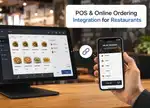
Accept, Process, and Profit with Ease!

Streamline Your Online Orders with Plum POS

Comparison Table

Provider
Best For
Offline Mode
KDS
Mobile POS
Loyalty
Payroll Integration
Accounting Integration
AI Features
Customer Support
Free Trial/Demo
Plum POS
Independent & Multi-location Restaurants
Yes
Yes
Yes
Yes
Yes
Yes
Restaurant Reporting & Forecasting
24x7 human support, tight SLAs.
Demo Available
Toast
Growing Restaurants
Yes
Yes
Yes
Yes
Yes
Yes
Limited AI Tools
24/7 Support
Demo Available
Square
Small Restaurants & Food Trucks
Limited
Yes
Yes
Paid Add-on
Limited
Yes
Basic Analytics
Standard Support
Free Plan
Clover
Budget-conscious Restaurants
Limited
Add-on
Yes
Add-on
Third-party
Yes
Basic Reporting
Depends on Reseller
Demo Available
Lightspeed
Retail + Restaurant
Yes
Yes
Yes
Yes
Yes
Yes
Inventory Insights
Good
Demo Available
TouchBistro
Full-service Dining
Yes
Yes
iPad
Add-on
Third-party
Yes
Limited
Good
Demo Available
Revel
Enterprise
Yes
Yes
Yes
Yes
Yes
Yes
Advanced Reporting
Dedicated
Demo
NCR Aloha
Franchise Chains
Yes
Yes
Yes
Yes
Yes
Yes
Enterprise Analytics
Enterprise Support
Custom Demo
Epos Now
Budget Restaurants
Yes
Limited
Yes
Add-on
Third-party
Yes
Basic
Mixed Reviews
Demo
PAR Brink
QSR Chains
Yes
Yes
Yes
Yes
Yes
Yes
Advanced Analytics
Enterprise
Demo

How We Evaluated These SpotOn Alternatives

Every review below follows the same format so you can compare apples to apples- overview, key features, pros, cons, best-fit business type, pricing (where publicly available), and the specific reasons an operator might choose it over SpotOn, plus where it might not be the right call.

1. Plum POS

Plum POS is built specifically for restaurants that need more than basic order management. Instead of adapting retail software for food service, it helps restaurant operators control food costs, streamline kitchen operations, optimize labor, and manage multiple locations from a single platform.

Key Features

  • Track inventory down to ingredients and recipes instead of just finished menu items.
  • Automatically deduct stock after every sale to reduce manual inventory work.
  • Monitor food costs in real time to identify waste and protect margins.
  • Optimize staff scheduling using labor reports and sales insights.
  • Manage menus, pricing, inventory, and reports across multiple locations from one dashboard.
  • Access restaurant-specific reports covering sales, menu performance, labor costs, inventory usage, and profitability.
Pros
  • Onboarding tends to be more guided and consultative compared to fully self-service platforms
  • Reporting is built specifically around restaurant metrics (food cost, labor percentage, item velocity) rather than generic retail sales data
  • Handles both QSR and full-service workflows without needing a completely different product tier
  • Multi-location reporting gives owners a single view across sites without needing a separate enterprise contract
Cons
  • Custom pricing requires contacting the sales team for a personalized quote.
  • Restaurants should verify compatibility with any specialized third-party applications before implementation.
  • Initial setup and onboarding may take longer for multi-location or complex restaurant operations.
Best For
Growing restaurant businesses that need more than basic POS functionality, including inventory management, labor optimization, food cost tracking, and multi-location reporting.

Pricing
Plum POS doesn't publish a flat rate card; pricing is generally quoted based on terminal count, payment processing needs, and add-on modules like inventory or labor. Prospective users should request a live quote for their specific location count and feature needs.

Why Choose It Over SpotOn
Operators who feel like SpotOn's support model is too self-service, or who want reporting more tightly built around food cost and labor metrics, often find Plum POS's more consultative onboarding and restaurant-specific dashboards a better operational fit, particularly for full-service concepts with complex modifiers and multi-location oversight needs.

When It May Not Be the Right Fit
Plum POS is best suited for restaurants seeking an integrated platform for POS, inventory, labor, and reporting. Businesses with highly specialized enterprise requirements should evaluate their specific operational and technical needs before selecting any restaurant POS system.

2. Toast

Toast is one of the most widely adopted restaurant POS platforms in North America, built specifically for food service from the ground up rather than adapted from general retail software.

Key Features

  • Android-based hardware built specifically for restaurant environments
  • Integrated online ordering, delivery management, and loyalty tools
  • Deep third-party integration marketplace
  • Kitchen display systems (KDS) built natively into the platform
  • Payroll and team management add-ons
Pros
  • Extremely restaurant-specific feature set
  • Large support and integration ecosystem
  • Strong reporting and analytics suite
Cons
  • Hardware is proprietary you generally can't bring your own devices
  • Contract terms and processing fees can add up for smaller operations
  • Some users report a steeper learning curve during onboarding
Best For
Growing full-service and quick-service restaurants that want an all-in-one ecosystem and are comfortable with proprietary hardware.

Pricing
Toast uses tiered plans starting around a low monthly software fee for basic plans, with more comprehensive bundles running higher depending on hardware and processing needs. Custom quotes are standard.

Why Choose It Over SpotOn
Operators wanting the largest integration marketplace and the most restaurant-specific hardware ecosystem often lean toward Toast.

When It May Not Be the Right Fit
Businesses wary of hardware lock-in or long-term contracts may find the commitment heavier than SpotOn's more flexible model.

From Click to Kitchen

Handle All Your Online Orders with Plum POS

3. Square for Restaurants

Square is one of the most recognizable names in small business payments, and its restaurant-specific product extends that ecosystem into food service.

Key Features

  • Free-tier plan available for very small operations
  • Simple, flat-rate processing pricing
  • Built-in online ordering and Square Online integration
  • Easy setup with minimal hardware requirements
Pros
  • Extremely fast to set up and start using
  • No long-term contract required
  • Transparent, predictable pricing
Cons
  • Advanced restaurant features (deep labor forecasting, complex modifiers) are less robust than dedicated restaurant platforms
  • Customer support can feel generic compared to restaurant-specialist providers
Best For
Food trucks, small cafes, pop-ups, and single-location counter-service concepts that prioritize simplicity and low upfront cost.

Pricing
Free plan available; paid plans typically start in the range of $60$165/month depending on features, plus processing fees.

Why Choose It Over SpotOn
Operators wanting the fastest, lowest-commitment setup, especially very small or seasonal operations, often find Square simpler to get running.

When It May Not Be the Right Fit
Full-service restaurants with complex floor management or multi-location reporting needs will likely outgrow Square's restaurant tools quickly.

4. Clover

Clover is a widely available POS hardware and software platform, often distributed through banks and payment processors, making it accessible for small business owners already banking with certain institutions.

Key Features

  • Wide hardware selection, from compact countertop units to full stations
  • App marketplace for add-on functionality
  • Flexible processing options depending on reseller
Pros
  • Broad availability through banking partners
  • Reasonable entry-level pricing
  • Decent hardware flexibility
Cons
  • Feature depth for full-service restaurant operations is thinner than restaurant-specialist platforms
  • Pricing and contract terms can vary significantly depending on which reseller you sign up through
Best For
Small quick-service restaurants, cafes, and retail-adjacent food businesses on a tighter budget.

Pricing
Varies widely by reseller; typically starts around $60$100/month plus processing fees.

Why Choose It Over SpotOn
Budget-conscious operators, or those already banking with a Clover-affiliated institution, may find bundled pricing more attractive.

When It May Not Be the Right Fit
Because pricing and support quality depend heavily on the reseller, full-service restaurants needing consistent, restaurant-specific support may find this inconsistent.

5. Lightspeed Restaurant

Lightspeed serves both retail and restaurant verticals, with its restaurant product built around table management, menu engineering, and integrated payments.

Key Features

  • Advanced table and floor plan management
  • Menu engineering and profitability reporting
  • Integrated payments and multi-location tools
Pros
  • Strong reporting depth for full-service dining
  • Good fit for businesses that also run retail components (e.g., a restaurant with a retail merchandise counter)
Cons
  • Pricing tends to run higher for full feature access
  • Onboarding can take longer for complex menu builds
Best For
Full-service restaurants and hospitality businesses with hybrid retail/dining operations.

Pricing
Plans generally start around $69$399/month depending on tier, plus payment processing.

Why Choose It Over SpotOn
Restaurants needing sophisticated table and floor management, or hybrid retail-restaurant operations, often find Lightspeed's tools more purpose-built.

When It May Not Be the Right Fit
Simple counter-service concepts may find the platform more robust and pricier than what they actually need.

6. TouchBistro

TouchBistro is an iPad-based POS built specifically around full-service, reservation-driven dining experiences.

Key Features

  • Native table-side ordering on iPad
  • Built-in reservation and waitlist tools
  • Menu management with modifier depth
Pros
  • Purpose-built for full-service, sit-down restaurants
  • Intuitive interface for waitstaff
Cons
  • Less suited to quick-service or high-volume counter environments
  • Offline functionality and reporting depth vary by plan tier
Best For
Independent full-service restaurants and small groups prioritizing table-side service and guest experience.

Pricing
Starts around $69/month for a single terminal, with add-ons for reservations, loyalty, and online ordering priced separately.

Why Choose It Over SpotOn
Restaurants heavily focused on table-side service and reservations management may prefer TouchBistro's dining-specific workflow.

When It May Not Be the Right Fit
Fast-casual or QSR operations will likely find better speed-of-service tools elsewhere.

7. Revel Systems

Revel is an enterprise-grade POS platform built for high-volume, multi-location businesses that need heavy customization and centralized control.

Key Features

  • Robust multi-location management
  • Extensive API access for custom integrations
  • Advanced inventory and franchise management tools
Pros
  • Scales well for large, complex operations
  • Strong customization potential via open API
Cons
  • Steeper learning curve and longer implementation timeline
  • Pricing and contract terms are less transparent, geared toward larger accounts
Best For
Large multi-location restaurant groups, franchises, and enterprises needing deep customization.

Pricing
Custom enterprise pricing; not typically published, often requiring annual contracts.

Why Choose It Over SpotOn
Larger operations needing enterprise-level customization and centralized multi-site control often outgrow SpotOn's mid-market feature set.

When It May Not Be the Right Fit
Small independent restaurants will likely find Revel's complexity and pricing more than they need.

8. NCR Aloha (NCR Voyix)

Aloha has long been a standard in franchise and enterprise restaurant technology, known for reliability at scale across large chain operations.

Key Features

  • Deep franchise standardization tools
  • Long track record in high-volume QSR and casual dining chains
  • Strong offline resilience
Pros
  • Proven at enterprise and franchise scale
  • Reliable performance during high-volume rushes
Cons
  • Interface can feel dated compared to newer cloud-native platforms
  • Implementation and hardware costs tend to be higher
Best For
Established franchise chains and enterprise QSR/casual dining brands needing standardized operations across many locations.

Pricing
Enterprise pricing, quoted per deployment; not publicly listed.

Why Choose It Over SpotOn
Large franchise operators needing proven enterprise reliability across dozens or hundreds of locations often choose Aloha for its track record.

When It May Not Be the Right Fit
Independent restaurants and small groups will find the cost and complexity disproportionate to their needs.

9. Epos Now

Epos Now is a cloud-based POS serving both retail and hospitality businesses internationally, often appealing to budget-conscious operators.

Key Features

  • Cloud-based reporting accessible from anywhere
  • Retail and hospitality hybrid functionality
  • International payment and currency support
Pros
  • Competitive entry pricing
  • Available in multiple countries/currencies
Cons
  • Restaurant-specific depth (labor forecasting, advanced kitchen routing) is lighter than dedicated restaurant platforms
  • Customer reviews on support responsiveness are mixed
Best For
International operators, small cafes, and businesses wanting an affordable, straightforward cloud POS.

Pricing
Plans typically start around $39$99/month plus processing fees.

Why Choose It Over SpotOn
Operators outside the U.S., or those prioritizing lower entry cost over deep restaurant-specific features, may find this a simpler fit.

When It May Not Be the Right Fit
Full-service restaurants with complex kitchen operations will likely need more specialized tools.

10. PAR Brink POS

Brink POS (by PAR Technology) is built specifically for quick-service and fast-casual chains prioritizing speed and consistency across locations.

Key Features

  • Optimized for high-speed QSR transaction flow
  • Franchise-focused reporting and standardization
  • Strong API for integrating with loyalty and delivery platforms
Pros
  • Built specifically for speed-of-service in QSR environments
  • Solid franchise-level consistency tools
Cons
  • Less suited to full-service, table-side dining
  • Pricing generally geared toward multi-unit operators, not single independents
Best For
QSR and fast-casual chains, especially multi-unit franchise operators prioritizing transaction speed.

Pricing
Custom quotes based on location count; not publicly published.

Why Choose It Over SpotOn
Fast-casual and QSR franchise operators needing maximum speed-of-service and standardized multi-unit reporting often prefer Brink's QSR-first design.

When It May Not Be the Right Fit
Full-service, reservation-driven restaurants will find better-suited tools in platforms like TouchBistro or Plum POS.

How to Choose the Right SpotOn Alternative

There's real variation among SpotOn POS alternatives, and the right one depends less on brand reputation and more on how your specific operation runs day to day.

By restaurant size

  • Solo or very small operations (food trucks, pop-ups, single cafes)- Square, Clover, or Epos Now tend to offer the lowest barrier to entry.
  • Independent full-service restaurants- Plum POS, TouchBistro, and Toast are worth close comparison.
  • Multi-location groups (215 sites)- Plum POS, Lightspeed, and Toast scale reasonably well without enterprise-level complexity.
  • Large franchises and enterprise chains- Revel, NCR Aloha, and PAR Brink are commonly evaluated by organizations with complex operational and multi-location requirements.
By service style
  • Full-service, table-side dining- TouchBistro, Plum POS, Lightspeed
  • Quick-service and fast-casual- PAR Brink, Square, Clover
  • Hybrid retail-restaurant concepts- Lightspeed, Epos Now
By budget
Entry-level budgets generally point toward Square, Clover, or Epos Now. Mid-market operators with more complex needs often find better long-term value in Plum POS or Toast, even at a higher monthly cost, because the reporting and support depth reduce operational headaches later.

By growth plans
If you're planning to open additional locations in the next 1224 months, prioritize platforms with built-in-multi-location reporting from day one; retrofitting a single-location system later is more disruptive than choosing correctly upfront.

Final Thoughts

There's no universal "best" among SpotOn POS alternatives; the right system depends on your service style, location count, and how much hands-on support you want during onboarding. Independent restaurants and growing multi-location businesses looking for restaurant-specific reporting, inventory management, labor tools, and operational insights may find Plum POS a strong fit. Other platforms on this list may be better suited for businesses with different budgets, deployment preferences, or operational requirements.

Whichever direction you go, the smartest move is requesting live demos from two or three finalists and comparing actual monthly costs, including processing fees and add-ons rather than relying on published starting prices alone.

If you're looking for a restaurant POS system that combines point of sale, inventory management, labor optimization, reporting, and multi-location management in one platform, schedule a personalized demo of Plum POS. Seeing the system in action can help you determine whether it's the right fit for your restaurant before making the switch.

Online Orders Made Easy

Plum POS Ensures Seamless Processing

Frequently Asked Questions

How do I switch from SpotOn to another POS system?

Do SpotOn POS alternatives require long-term contracts?

Which SpotOn alternative is best for multi-location restaurants?

How long does it take to switch to a new restaurant POS?

Which restaurant POS has the lowest payment processing fees?

Can I transfer my existing menu and customer data to a new POS system?

Will I need to buy new POS hardware?

What should I consider before switching restaurant POS systems?

Is SpotOn good for restaurants?